


What if the 'vegan leather' bag you've chosen as a conscious alternative is actually a petroleum-based product destined for a landfill in less than twenty-four months? It's entirely understandable to feel a sense of hesitation amongst the confusing labels of 'synthetic' and 'eco-friendly' that dominate the high street today. You likely seek an accessory that reflects your commitment to quality, yet the fear of a favourite piece peeling after a single season is a common and valid concern. To make a truly informed choice for your wardrobe, one must first ask: what is pu leather? We would be delighted to offer some clarity on this material, which was first synthesised in 1937 but has only recently flooded the fashion market under various marketing guises.
We'll explore the chemical composition of polyurethane and explain why these synthetic mimics cannot match the grace or durability of genuine, artisan-crafted hides. This guide provides the technical insight needed to distinguish between fleeting trends and lasting quality. You'll gain the confidence to choose an investment piece that offers true longevity whilst supporting the finest traditions of craftsmanship.
Key Takeaways
- Understand exactly what is pu leather by uncovering its chemical composition as a thermoplastic polymer rather than a genuine organic hide.
- Dispel the misconceptions surrounding "vegan leather" marketing and evaluate the significant environmental cost of petroleum-based synthetic production.
- Recognise why synthetic materials inevitably succumb to peeling and cracking, rendering them a temporary choice whilst genuine leather offers a lifetime of elegance.
- Master the sensory techniques used to distinguish mass-produced plastics from authentic hides through professional scent and tactile assessments.
- Explore the heritage of artisanal bovine leather, meticulously hand-stitched to ensure your wardrobe is centred on quality and enduring luxury.
Defining PU Leather: The Synthetic Reality Behind the Label
Discerning shoppers often find themselves asking, what is pu leather, especially when encountering it in high-end retail environments. At its most basic level, polyurethane leather is a man-made material designed to replicate the aesthetic of animal hide without the biological origin. It's a thermoplastic polymer that's applied to a base material, typically polyester or cotton, to create a flexible, water-resistant fabric. While it may look convincing at a distance, it's a plastic product rather than an organic material. We're often delighted to assist our clients in understanding these nuances, as the longevity of a true investment piece depends entirely on the quality of its components.
In luxury boutiques, you'll frequently see this material rebranded with more palatable names. Terms like "vegan leather," "faux leather," or "synthetic hide" are used to obscure its chemical roots. While 100% PU leather is entirely synthetic, Bicast leather offers a more complex composition. This specific type uses a backing made of split leather, which is a lower-quality layer of hide that remains after the top grain is removed. This fibrous base is then coated with a thick layer of polyurethane and embossed to look like premium grain. It's a hybrid that lacks the durability of the full-grain skins we favour for our handbags.
The Chemical Composition of Polyurethane
The production of polyurethane dates back to 1937, when it was first developed by Otto Bayer. It relies heavily on petroleum-based polymers that are processed into a liquid form. To achieve a realistic look, manufacturers use heavy metal rollers to emboss a "grain" pattern directly onto the plastic surface. During this manufacturing process, solvents and Volatile Organic Compounds (VOCs) are used to maintain the liquid state of the plastic before it cures. In some factory settings, VOCs can account for up to 30% of the weight of the liquid coating before evaporation occurs.
PU vs. Genuine Bovine Leather: A Fundamental Contrast
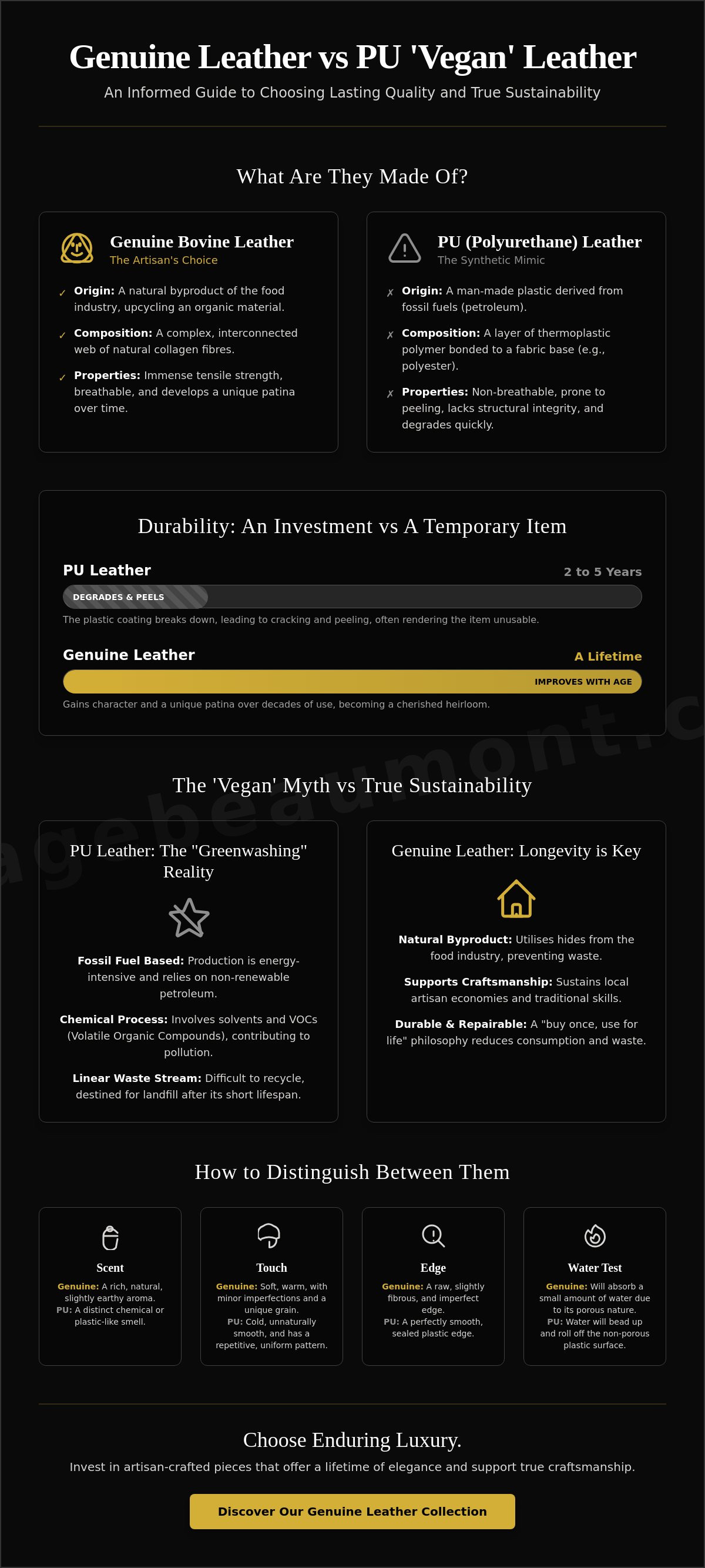
The difference between these materials is rooted in their origin and structural integrity. Bovine leather is a natural byproduct of the food industry, possessing a complex web of collagen fibres that provide immense tensile strength. PU leather, by contrast, is a manufactured chemical layer that lacks this interconnected fibrous structure. It doesn't breathe, it doesn't develop a patina, and it's prone to "peeling" as the plastic bonds break down over time. PU leather is a synthetic mimicry of organic texture.
The 'Vegan Leather' Myth: Sustainability vs. Synthetic Plastic
The term "vegan leather" is a masterclass in modern marketing. It successfully rebrands synthetic plastic as an ethical, plant-adjacent choice whilst obscuring its chemical reality. When we examine what is pu leather, we find a material primarily derived from fossil fuels. It's essentially a layer of polyurethane plastic bonded to a polyester backing. Understanding exactly what is pu leather helps consumers see past the "vegan" label to the plastic reality beneath. This nomenclature allows manufacturers to bypass the negative connotations of "plastic," appealing to the environmentally conscious consumer with a label that feels virtuous but lacks ecological substance.
Greenwashing in the Fashion Industry
Fashion brands frequently use "vegan" as a shorthand for "eco-friendly," yet the production of synthetic hides is an energy-intensive process rooted in petroleum extraction. A 2023 life cycle assessment from the KTH Royal Institute of Technology explored the environmental impact of PU leather, noting that whilst animal leather has high land-use requirements, the chemical toxicity and carbon emissions of plastic production create a significant long-term burden. Even "recycled" PU alternatives face a limited lifecycle; the complex bonding of different materials means they often cannot be recycled a second time. This leads to a linear waste stream that contrasts sharply with genuine leather, which supports traditional craftsmanship and sustains local artisan economies across the UK and Europe.
Longevity as the Ultimate Form of Sustainability
True sustainability isn't found in a material's name but in its lifespan. A synthetic bag typically begins to peel or "crack" within 24 to 60 months. Once the plastic coating degrades, it's impossible to fix. These items quickly become landfill fodder, where they persist for centuries, shedding microplastics into the ecosystem. In a world of fast-fashion synthetics, we champion the concept of "slow luxury."
A single, meticulously crafted piece from the Lalage Beaumont London boutiques is designed to be a lifetime investment. Unlike PU, genuine leather is inherently repairable. If a handle requires attention after a decade of service, our artisans can provide the necessary care to restore it. Choosing one bag that lasts 20 years instead of five synthetic bags that end in a landfill is the most responsible choice a consumer can make. We'd be delighted to help you find a timeless handbag that reflects your commitment to quality and enduring style.
Durability and Longevity: Why PU Leather Fails the Investment Test
Whilst the initial appearance of a synthetic accessory may be convincing, the reality of its lifespan often leaves much to be desired. Those seeking a true investment piece should consider the inherent limitations of polyurethane coatings. Understanding What Is PU Leather reveals that it is essentially a thin layer of plastic bonded to a fabric backing. This construction is prone to delamination; a process where the surface begins to flake and peel away from the base. Unlike the organic fibres found in genuine calfskin, these synthetic layers cannot be nourished with creams or oils. Once the cracking begins, the damage is irreversible and the item usually finds its way to a landfill within two to three years of purchase.
The British climate presents unique challenges for these synthetic materials. The constant fluctuation between damp outdoor conditions and the dry heat of central heating accelerates the degradation of the plastic polymers. This environment causes the material to become brittle, leading to unsightly splits at stress points such as handles and corners. There is also the issue of breathability. Synthetic bags lack the natural pores of bovine leather, meaning they do not adjust to temperature changes. They often feel clammy to the touch in summer and stiffly unresponsive during a cold London winter.
The Patina Factor: Aging Gracefully
A significant distinction between luxury materials and their synthetic counterparts is how they behave over time. Real leather is a living material that develops a patina; a soft sheen and deepening of colour that reflects the life of the owner. It is a material that records your history, growing more supple and beautiful with every outing to the theatre or a weekend in the country. Conversely, a bag made from handbags crafted from PU leather will only ever look its best on the day it is unboxed. From that moment on, it is in a state of decline. It cannot age gracefully because it possesses no soul; it simply wears out until it is no longer fit for use.
Structural Integrity in Occasion Wear
For structured silhouettes like our signature Odette bag, the natural rigidity of high quality bovine leather is indispensable. This leather provides a firm architectural foundation that supports the weight of your daily essentials without losing its form. Synthetic alternatives lack this internal strength and will frequently sag or bulge under pressure, ruining the sophisticated profile of a formal outfit. This lack of integrity also affects the hardware. Screws and toggles require a dense, fibrous base to remain secure. In a PU bag, the plastic often tears around these attachment points, leading to catastrophic failure of the clasps or straps that no artisan can truly mend. Choosing genuine leather ensures that your accessory remains as poised and elegant as the day you first wore it.
How to Distinguish PU from Genuine Handcrafted Leather
Distinguishing between high-quality hide and synthetic alternatives requires a keen eye and a reliance on the senses. Whilst manufacturers have become adept at mimicking the visual grain of calfskin, understanding what is pu leather at a molecular level reveals its inherent limitations. Synthetic materials are essentially a plastic coating applied to a fabric backing; they lack the organic complexity of a natural skin. To ensure you're investing in an authentic piece, you should begin with the scent test. Genuine leather carries a rich, earthy aroma derived from the tanning process. Conversely, PU leather often emits a sharp, chemical odour reminiscent of new plastic or petroleum, which persists long after the item has left its packaging.
The physical sensation of the material provides further evidence. Real leather feels supple and possesses a subtle grip that warms to your touch almost instantly. Plastic-based mimics remain stubbornly cold and feel unnaturally smooth, lacking the microscopic variations found in nature. If you're browsing in a boutique, look for the "Made in Britain" seal or the official "Genuine Leather" hallmark. These signify a commitment to traditional standards that mass-produced synthetics simply cannot match.
Sensory Clues for the Discerning Shopper
Examine the edges of the item closely. In synthetic production, edges are often perfectly uniform or sealed with a thick, rubbery paint to hide the tell-tale fabric base. Real leather edges show the fibrous structure of the hide. You might also try the water test. A tiny drop of moisture will be absorbed by genuine, porous leather within 30 seconds, whilst it will simply bead and roll off a PU surface. Look at the stitching holes too. If you see white, synthetic threads or a fabric mesh peeking through, you're looking at a plastic composite rather than a natural hide.
Price as a Proxy for Quality
Price remains one of the most reliable indicators of authenticity. Traditional vegetable tanning can take up to 60 days to complete; it's a slow, artisanal process that ensures the longevity and beauty of the finished product. When a price seems surprisingly low, it typically reflects the use of what is pu leather or other low-cost synthetics that bypass these meticulous methods. Investing in handcrafted leather handbags UK ensures you're receiving a piece defined by ethical sourcing and expert craftsmanship. These investment pieces are designed to age gracefully, developing a unique patina that synthetic materials can never replicate.
Why Discerning Collectors Choose Genuine Bovine Leather
Whilst understanding what is pu leather is useful for identifying synthetic alternatives, the discerning collector knows there's no substitute for the character of authentic bovine hide. Lalage Beaumont sources the finest "palmellato" and "dolce" leathers from specialised, family-run tanneries in Italy and Spain. These regions have been the global centre of leather craftsmanship since the 19th century, maintaining traditions that modern mass-production cannot replicate. Every investment piece is the result of a meticulous process where each stitch is placed by hand, ensuring the structural integrity of the bag remains flawless for decades.
The choice of genuine leather isn't merely about aesthetics; it's about the physical properties of the material. Unlike the 12 to 24-month lifespan common with synthetic mimics, our handbags are designed to be passed down through generations. To ensure your piece is truly unique, we offer a bespoke service that allows you to tailor your accessory to your specific wardrobe. You can select from a curated palette of over 25 seasonal colours, ensuring a perfect match for your personal style and existing collection.
The Art of the Investment Handbag
A structured leather bag serves as the definitive finishing touch for the most prestigious dates on the British social calendar. Whether you're attending Royal Ascot or a formal London wedding, an authentic leather accessory provides a level of quiet confidence that what is pu leather simply cannot offer. These pieces are designed to harmonise with our luxury mother of the bride outfits, creating a polished look that's both sophisticated and timeless.
The versatility of our genuine leather collection allows for effortless coordination across your entire ensemble. Our clients often choose to personalise their bags by intertwining silk scarves around the handles or matching the leather's texture with our bespoke occasion hats. It's this commitment to a total, elegant aesthetic that brings clients back to our boutiques year after year.
Delighted to Assist: Personal Service in Knightsbridge
We invite you to experience the tactile quality of our handcrafted collections at our Burlington Arcade or Knightsbridge boutiques. There's no better way to appreciate the difference between synthetic materials and artisanal leather than by feeling the weight and texture in person. Our expert team is always delighted to assist you in selecting the right silhouette for your needs, whether it's a compact clutch or a spacious tote.
During your visit, we'll provide expert guidance on leather care to ensure your investment maintains its lustre. We believe in slow luxury, where the relationship with the customer continues long after the initial purchase. If you'd like to explore our latest designs or discuss a bespoke order, we'd be delighted to welcome you.
Explore our collection of genuine handcrafted handbags
Invest in Craftsmanship That Endures
Understanding what is pu leather reveals a material composed primarily of polyurethane plastic, which industry reports from the Leather Working Group suggest lacks the 20 year potential lifespan of genuine hide. Whilst synthetic options offer a temporary aesthetic, they often peel and crack within 12 to 24 months of regular use. True luxury resides in materials that age gracefully, developing a unique character that plastic simply cannot replicate. Choosing genuine leather isn't just about style; it's a commitment to sustainability and enduring value.
At Lalage Beaumont, we prioritise the integrity of traditional craftsmanship. Our handbags are designed by Lalage Beaumont in London and hand-stitched in traditional ateliers to ensure every seam remains secure for decades. We source our materials exclusively from the finest European tanneries, adhering to quality standards that mass-produced synthetics ignore. Every piece reflects a heritage of excellence, created for those who appreciate the finer details of British design and the longevity of natural materials.
Discover the timeless elegance of our handcrafted leather handbags
We'd be delighted to assist you in selecting a piece that you'll cherish for many years to come.
Frequently Asked Questions
Is PU leather real leather?
No, PU leather isn't real leather; it's a completely synthetic material crafted from polyurethane. Whilst genuine leather is a natural byproduct of the agricultural industry, this alternative is a plastic-based polymer. Research from the Leather Working Group indicates that authentic hides offer breathability and longevity that man-made materials simply cannot replicate. It's often used in mass-market fashion to mimic the appearance of the real thing at a lower production cost.
How long does PU leather last before peeling?
You can typically expect PU leather to last between 2 and 5 years before the surface begins to peel or flake. This degradation, known as hydrolysis, occurs when the plastic coating breaks down due to moisture and heat exposure. Unlike a fine leather handbag that develops a beautiful patina over decades, synthetic items often require replacement within 36 months. This short lifespan is why we prioritise traditional craftsmanship and durable, natural materials in our London boutiques.
Is PU leather toxic to wear or handle?
PU leather is generally safe for daily wear, though its production involves chemicals like dimethylformamide (DMF) and various volatile organic compounds. The European Chemicals Agency (ECHA) regulates these substances to ensure consumer safety within the UK. Whilst the finished product isn't toxic to touch, the manufacturing process often has a higher environmental impact than natural tanning. Choosing high-quality, responsibly sourced materials ensures your wardrobe remains both elegant and mindful of your well-being.
Can you fix PU leather once it starts to crack?
It's nearly impossible to permanently fix PU leather once the synthetic surface begins to crack or delaminate. You might find temporary repair kits using vinyl adhesives, but these rarely restore the original texture or appearance. Because the material is a thin layer of plastic bonded to a fabric backing, the structural integrity is lost once it breaks. We always recommend investing in genuine leather pieces, as these can be professionally refurbished and maintained for a lifetime of use.
Is PU leather waterproof and good for rainy UK weather?
Yes, PU leather is naturally waterproof because its plastic surface doesn't absorb liquids. This makes it a practical choice for the unpredictable British weather, as raindrops will simply bead off the surface. However, it lacks the breathability of natural hides, which can lead to discomfort during longer periods of wear. Whilst it handles a sudden downpour well, it won't offer the same luxurious feel or enduring quality as a treated, water-resistant calf leather.
What is the difference between PU leather and bonded leather?
The primary difference is that what is pu leather is entirely synthetic, whereas bonded leather contains between 10% and 20% shredded leather scraps. Bonded leather is created by pulping these remnants and sticking them to a paper or fabric backing with polyurethane. In contrast, PU leather is a solid layer of plastic applied to a base material. Both are considered inferior to full-grain leather, which remains the gold standard for luxury accessories and formal attire.
Is vegan leather just another name for PU leather?
In most contemporary fashion contexts, vegan leather is simply a marketing term for PU leather or similar synthetic polymers. Whilst some innovative brands use plant-based alternatives like pineapple or apple fibres, approximately 90% of "vegan" accessories on the market are made from polyurethane or PVC. If you're seeking a sustainable choice, it's vital to check the specific material composition. We believe in the longevity of high-quality natural materials that don't need frequent replacement, supporting a more sustainable approach to fashion.
How can I tell if my designer bag is real leather or PU?
You can distinguish the materials by examining the scent, texture, and edges of the item. Genuine leather has a distinct, earthy aroma and a unique grain pattern, whilst what is pu leather often smells faintly of chemicals and has a perfectly uniform surface. If you look at a cut edge, real leather will have a fibrous structure, whereas synthetic versions show a fabric or foam core. If you're unsure, we'd be delighted to assist you with an expert assessment at our London boutique.