


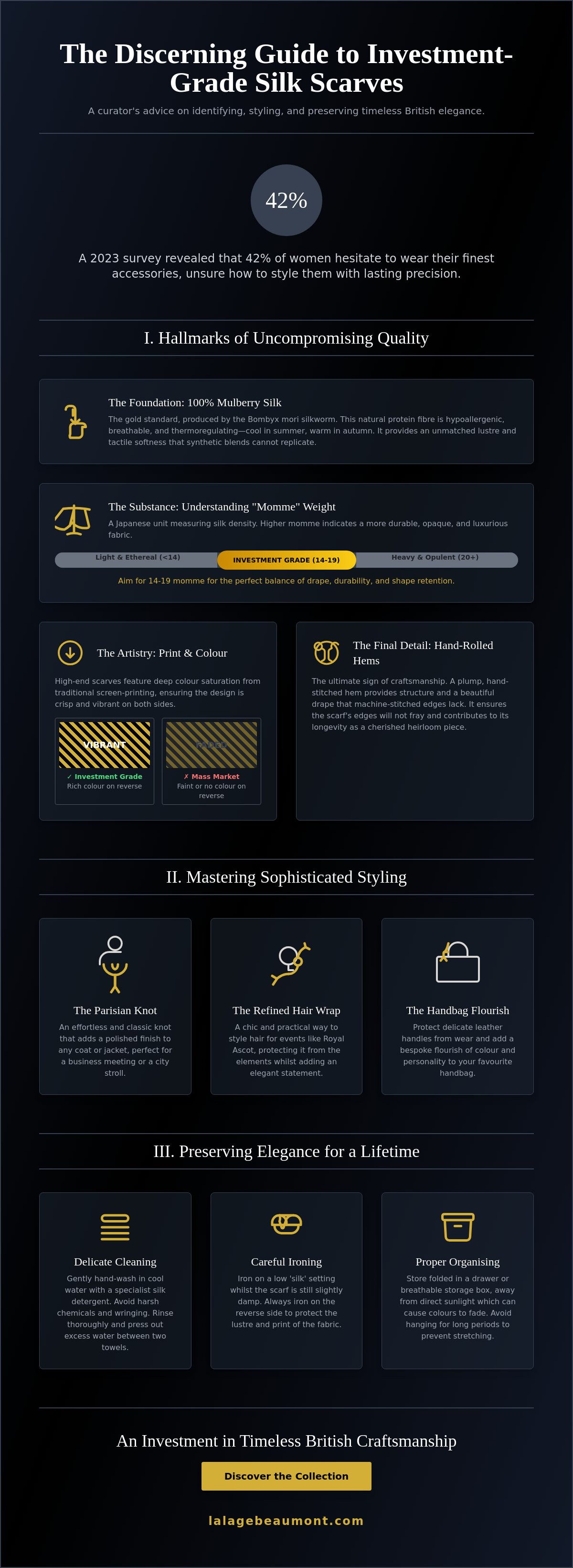
A recent survey of luxury consumers revealed that 42% of women feel hesitant to wear their finest accessories because they're unsure how to style them with lasting precision. It's a familiar disappointment when a hand-rolled silk scarf loses its shape before you've even arrived at a morning meeting or the Royal Ascot enclosure. You likely agree that whilst these pieces represent the pinnacle of British elegance, the complexities of silk weights and delicate maintenance can feel quite overwhelming. We believe that an investment in such exquisite craftsmanship should provide effortless confidence rather than a worry about snags or dulling colours.
We're delighted to provide this definitive guide to help you identify, style, and preserve your collection with the expertise of a seasoned curator. You'll learn how to distinguish superior silk weights, master secure knots for every occasion, and harmonise your scarves with structured leather handbags for a polished finish. We'll also share the essential cleaning and storage secrets used by London's premier boutiques to ensure your accessories remain as vibrant as the day they were first purchased.
Key Takeaways
- Learn how to discern investment-grade quality by understanding the significance of "momme" weight and the superior drape of genuine Mulberry silk.
- Master sophisticated styling techniques, from the effortless Parisian Knot to using a silk scarf as a refined hair wrap for any occasion.
- Discover the art of pairing fine silk with handcrafted leather handbags to add a bespoke flourish whilst protecting delicate handles from wear.
- Acquire professional insights on how to delicately clean, iron, and organise your collection to preserve the natural lustre of the fibres.
- Understand the historical heritage of this quintessentially British accessory and its enduring role as a cornerstone of the elegant wardrobe.
The Allure of the Silk Scarf: A Timeless British Wardrobe Staple
A finely crafted silk scarf is much more than a simple accessory; it's a foundational element of the sophisticated British wardrobe. For generations, this versatile piece has represented the intersection of practical utility and high-end fashion. When we examine the history of scarves, we see a transformation from functional garments used in Ancient Rome to the exquisite silk versions that became synonymous with 17th-century luxury. Today, silk remains the gold standard for those who value longevity and elegance.
The enduring appeal of silk lies in its remarkable natural properties. It's a protein-based fibre that offers exceptional thermoregulation. This means it keeps you cool during a warm garden party but provides a surprising layer of warmth during a crisp autumn walk. The fabric's natural lustre creates a depth of colour that synthetic alternatives simply cannot replicate. In an era defined by the "slow luxury" movement, the silk scarf stands out as an investment. It's a piece designed to be cherished for a lifetime, resisting the fleeting nature of seasonal trends.
Silk and the British Social Calendar
The British summer season brings a unique set of sartorial requirements. Whether you're attending Royal Ascot or a formal wedding in the Cotswolds, a silk scarf is an essential companion. It provides an effortless way to introduce a vibrant accent to structured occasion wear. These events often span an entire day, starting with a formal morning service and concluding with an evening reception. Silk is the perfect medium for this transition. It stays crisp and elegant throughout the day's festivities without losing its shape or vibrancy.
The Psychology of Silk: Why It Feels Luxurious
The tactile experience of high-grade silk, particularly weights of 19-momme or higher, creates an immediate sense of wellbeing. It's incredibly gentle against the skin. This physical comfort translates into psychological ease. There's a quiet confidence that comes from wearing a fabric with such a rich heritage. The way silk reflects light is also scientifically pleasing; its triangular prism-like structure scatters light at different angles, which naturally enhances various skin tones and outfit palettes. It's a subtle signal of refined taste that doesn't need to shout to be noticed.
The benefits of choosing high-quality silk include:
- Natural lustre that enhances the wearer's complexion
- Exceptional durability when cared for correctly
- Versatility across all four seasons due to breathable fibres
- A hallmark of traditional British craftsmanship and heritage
We're delighted to see how our clients use these pieces to express their individuality. A silk scarf isn't just an add-on; it's a statement of quality and a nod to a more mindful way of dressing. By choosing natural fibres, you're embracing a tradition that dates back to the Han Dynasty in 206 BC, yet remains perfectly suited for the modern woman's lifestyle.
Identifying Quality: How to Choose an Investment-Grade Silk Scarf
Selecting an investment-grade silk scarf requires an eye for detail and an appreciation for heritage techniques. True luxury begins with 100% Mulberry silk, a fibre harvested from the Bombyx mori silkworm. Unlike synthetic blends that often feel clammy or static-heavy against the skin, this natural protein fibre is hypoallergenic and breathable. It's a material that adapts to your body temperature, providing warmth in the winter and remaining cool during a summer garden party.
Quality is technically measured by "momme" weight, a Japanese unit where 1 momme equals 4.340 grams per square metre. For a scarf intended to last a lifetime, look for a weight between 14 and 19 momme. This specific density ensures the fabric has enough substance to hold its shape and resist snagging, yet remains light enough to drape effortlessly. While learning how to style a silk scarf adds immediate flair to your wardrobe, the foundation of a good investment is the clarity of the print. High-end pieces display deep colour saturation that remains visible on the reverse side. This is often the result of traditional silk-screen printing, where each colour is applied using a separate screen, rather than modern digital printing which can leave the underside looking pale and unfinished.
The Importance of the Hand-Rolled Hem
A hand-rolled hem is the definitive hallmark of an artisanal product. Skilled craftspeople roll the edge of the silk by hand and secure it with tiny, discrete stitches that are almost invisible. This process takes approximately 35 to 45 minutes for a single 90cm square. These stitches allow the edge to remain plump and supple, which is vital for how the fabric falls. Machine-finished edges are flat and stiff; they lack the "bounce" required for a sophisticated drape and tend to fray more easily over time. You can spot a genuine hand-roll by its subtle, slightly irregular stitches, which prove the piece wasn't produced on a mass-market assembly line.
Choosing the Right Shape and Size
Your choice of dimensions depends on your personal style and the occasion. The 90cm square remains the most popular size for its sheer versatility. It's large enough for elaborate knots but small enough not to overwhelm the frame. For those seeking a contemporary touch, silk ribbon scarves offer a slim, elegant alternative. These are particularly effective when tied around the handle of a curated leather handbag or worn as a chic, minimalist necktie. If you're preparing for a formal evening event or a wedding, a large stole or shawl provides a more dramatic silhouette and essential warmth. If you'd like to see how these different shapes complement a tailored look, we'd be delighted to welcome you to our London boutique for a personal styling consultation.
Mastering the Art of Styling: How to Wear a Silk Scarf for Every Occasion
The silk scarf is perhaps the most versatile accessory in a refined wardrobe. For effortless everyday chic, the Parisian Knot remains a favourite. Fold your scarf in half to create a loop, drape it around the neck, and pull the loose ends through. It's a simple technique that instantly elevates a cashmere jumper or a crisp white shirt. For those seeking a creative silhouette, try using a large square as a belt. Threading a vibrant silk print through the loops of a tailored dress or cinching it over a structured blazer adds a bespoke touch to your ensemble whilst elegantly defining the waist.
Neckline Elegance: Knots for Every Collar
Selecting the right knot depends entirely on your choice of neckline. The Cowboy Point is particularly effective with open-neck shirts or tweed jackets. Fold the silk scarf into a triangle, position the point at the front, and secure the ends at the nape of the neck. For high-neck blouses, the Ascot Tie provides a more formal approach. Cross the ends over and tuck them neatly into the collar to evoke a 1950s-inspired aesthetic. Alternatively, the Loose Drape is ideal for long coats. Simply let the scarf hang untied to create vertical lines that elongate the silhouette and add a sense of fluid grace to your movement.
Silk in the Hair: Modern Retro Styling
Silk is as practical as it is beautiful, especially when used to protect a hairstyle. The Grace Kelly wrap involves folding a large square into a triangle and tying it securely under the chin. It's a sophisticated choice for travelling in style or attending outdoor events where the British weather might be unpredictable. For a more playful look, silk ribbon scarves are perfect for finishing a polished ponytail. These slim ribbons add a subtle pop of colour without the bulk of a larger square. If you're preparing for a wedding, consider the Woven Braid. Integrating a slim silk piece into an intricate plait adds texture and a unique focal point that pairs beautifully with occasion wear.
For formal evening events, a large silk square serves as an exquisite alternative to a heavy wrap. Draping the fabric broadly over the shoulders allows the intricate patterns to be fully appreciated. This technique provides light coverage for a gala or a formal dinner, ensuring you remain comfortable without compromising the elegance of your gown. We are always delighted to assist our clients in selecting the perfect dimensions for their specific styling needs.
Elevating Your Accessories: How to Style a Silk Scarf with Luxury Handbags
A handcrafted leather handbag represents a significant investment in British craftsmanship. Pairing it with a silk scarf is the mark of a discerning collector who understands both form and function. This symbiotic relationship is as much about preservation as it is about style. The silk acts as a protective barrier, shielding the delicate leather of the handles from natural oils, hand creams, and perspiration. This is especially vital for lighter shades of leather where a patina might otherwise develop unevenly. By introducing a scarf, you're not just decorating; you're ensuring the longevity of your piece.
Personalising an investment bag like the Odette or the Fonteyn allows you to express your unique aesthetic. Choosing colours that contrast with the leather can make a bold statement, whilst tonal selections offer a more subtle, sophisticated depth. It's a simple way to transition a classic bag from a professional morning meeting to an elegant afternoon tea. The texture of the silk against the grain of the leather creates a tactile contrast that's deeply satisfying to carry. Whether you choose to highlight the bag's structure or soften its silhouette, the addition of silk provides a bespoke touch that's entirely yours.
The Handle Wrap Technique
This method is a particular favourite amongst London's style elite because it provides a polished, equestrian-inspired finish. To achieve a professional look, we recommend using a silk ribbon scarf specifically designed for this purpose. Start by tying a neat knot at the base of the handle, then wrap the silk tightly and diagonally across the length of the leather. Consistency is the secret here. Ensure each turn overlaps the previous one by exactly 5mm to create a symmetrical, textured surface. Once you reach the opposite end, tuck the remaining silk through the final loop and pull it taut. It's a secure way to add a pop of colour whilst providing a soft, comfortable grip.
The Classic Side Knot
For those who prefer a more relaxed and fluid aesthetic, the classic side knot is an ideal choice. Drape a square silk scarf through the hardware or the base of the strap and secure it with a soft, simple knot. Let the tails flow naturally to create a sense of movement and interest as you walk. This look is particularly effective when you want to coordinate your accessories for a formal event. Try matching the print of your scarf to your occasion hat to create a cohesive and considered ensemble. It's these small, thoughtful details that elevate a look from standard to exceptional.
If you're looking to refresh your favourite accessory, we invite you to browse our collection of silk ribbon scarves to find your perfect match.
Preserving Elegance: A Guide to Caring for and Organising Your Silk Collection
A fine silk scarf is more than a mere accessory; it's a piece of artistry that requires meticulous care to maintain its lustre. To ensure your collection remains pristine for decades, you must protect the delicate fibres from common environmental stressors. One of the most frequent causes of damage is the accidental application of perfume or hairspray. These products contain alcohol and oils that can cause permanent discolouration or "bleeding" of the dyes. We suggest applying your fragrance and styling products at least ten minutes before dressing to ensure they're fully dry before they come into contact with your silk scarf.
Ironing silk requires a gentle touch and a patient hand. Always use the lowest heat setting on your iron, which is typically labelled as the "silk" setting. It's best to iron the fabric whilst it's still slightly damp, pressing on the reverse side to protect the vibrant finish of the print. Avoid using heavy steam directly on the material, as water droplets can leave unsightly marks that are difficult to remove. If the scarf is dry, place a clean, white cotton cloth between the iron and the silk to act as a protective barrier.
Cleaning and Stain Removal
Professional dry cleaning remains the gold standard for high-end silk. For investment pieces, particularly those with hand-rolled edges, a specialist cleaner understands how to treat the fabric without compromising its structural integrity. If you encounter a minor mark, spot cleaning with a specialised silk detergent is possible. Dampen a soft cloth and gently dab the area rather than rubbing, which can disturb the weave. To prevent shrinkage and fibre degradation, always ensure the water temperature remains below 30 degrees Celsius during any cleaning process.
Organising Your Collection
Proper storage is the best defence against permanent creasing and the threat of moths. For long-term preservation, we recommend wrapping your scarves in acid-free tissue paper and returning them to their original boxes. This prevents the silk from absorbing moisture or being exposed to light, which can fade the pigments over time. If you would like to keep your pieces more accessible, consider these refined solutions:
- Velvet-flocked hangers: These prevent snagging and stop the fabric from slipping off onto the floor.
- Drawer dividers: Storing scarves flat or loosely rolled in a dedicated drawer keeps them visible and crease-free.
- Seasonal rotation: Organise your collection by colour and weight to make daily styling effortless.
By grouping your silk ribbon scarves by hue or pattern, you'll find that selecting the perfect finishing touch for your outfit becomes a joyful part of your morning routine. Should you require further advice on maintaining your pieces, our team would be delighted to assist you in our London boutiques. Investing a little time in care ensures your silk remains a cherished part of your wardrobe for many years to come.
Embrace a Lifetime of Elegant Style
A well-chosen accessory is more than a fleeting trend; it's a legacy piece that defines your personal aesthetic. By selecting a high-quality silk scarf, you're investing in a garment that offers versatility across every social season. Whether you're coordinating with a handcrafted leather handbag or preparing for the formal requirements of the Royal Ascot Enclosure, the right choice brings a refined finish to any ensemble. The art of styling is a skill that rewards the wearer with confidence and grace.
Our pieces are meticulously hand-finished in the United Kingdom and Italy, ensuring they meet the exacting standards featured in British Vogue. They're specifically designed to complement our range of leather handbags, creating a cohesive look that transitions effortlessly from a professional setting to a gala evening. We would be delighted to assist you in finding your perfect match; explore our exquisite collection of silk scarves. We look forward to helping you curate a wardrobe that truly reflects your grace and sophistication.
Frequently Asked Questions
How can I tell if a scarf is made of 100% real silk?
You can identify 100% real silk by performing a ring test or a burn test on a small loose thread. Real silk should feel warm to the touch and pass easily through a wedding ring. If you burn a single thread, it should smell like burning hair and leave a fine, black ash. Synthetic fibres often smell like burning plastic and melt into a hard bead. We're delighted to offer scarves crafted from only the finest natural fibres in our London boutiques.
What is the best size of silk scarf for a beginner to start with?
A square scarf measuring 90cm by 90cm is the most versatile size for those new to styling. This traditional "carré" size provides enough fabric for classic neck knots, headscarf styles, or even as a belt. Smaller 45cm squares, often called "gavroches," are lovely for wrist wraps but offer less flexibility. At Lalage Beaumont, we find the 90cm square remains the gold standard for occasion wear and daily elegance.
Can I wear a silk scarf with a casual outfit like jeans and a white shirt?
Yes, a silk scarf adds a refined touch to a simple ensemble of denim and a crisp white shirt. This combination is a favourite amongst British stylists for achieving an effortless, "off-duty" look. You might try a loose knot or a simple drape to elevate your weekend attire. It's an excellent way to introduce colour and pattern into a minimalist wardrobe whilst maintaining a sophisticated silhouette.
How do I stop my silk scarf from slipping off my neck or hair?
You can secure your scarf by using a dedicated scarf ring or a discreet safety pin hidden beneath the folds. For hair styling, we recommend using four to six bobby pins or a velvet headband underneath the silk to provide necessary friction. Silk's natural smoothness is a hallmark of quality, but it requires these small adjustments to stay in place during a busy day at the boutique or a formal event.
What is momme count and why does it matter for silk quality?
Momme count is a standard unit of measurement representing the weight of 100 yards of silk fabric in pounds. For a high-quality silk scarf, look for a momme count between 12 and 19. A count of 14 momme is often considered the ideal balance of durability and drape. Lower counts under 10 momme may feel flimsy; meanwhile, counts above 22 momme are typically reserved for heavy upholstery or bedding.
Is it better to fold or hang silk scarves when storing them?
It's better to store your scarves flat or folded in their original boxes to prevent the fabric from stretching. Hanging silk for long periods can cause the fibres to distort, especially if the hanger is narrow or made of wire. We suggest folding them into thirds and placing them in acid-free tissue paper. This method preserves the hand-rolled edges and ensures your investment pieces remain in pristine condition for decades.
How often should I clean my silk scarf?
You should clean your scarf once every six months or after five to ten wears, depending on exposure to perfumes and oils. Frequent washing can dull the natural lustre of the silk fibres over time. If you notice a specific mark, we'd be delighted to assist with advice on professional dry cleaning. Always ensure your dry cleaner has experience with delicate luxury items to maintain the integrity of the hand-printed designs.
Can a silk scarf be repaired if it gets a snag or a pull?
A skilled specialist can often repair minor snags by gently massaging the fabric to encourage the thread back into place. For more significant damage, professional re-weaving services can restore the weave, though this is a meticulous process. We believe in the longevity of our pieces and encourage clients to seek expert repairs. Maintaining your wardrobe is a key component of sustainable luxury and British craftsmanship.