


Have you ever found yourself caught in a sudden British downpour, shielding your favourite leather piece whilst worrying about the permanent damage the damp might cause? It's a common anxiety for those who view their accessories as lifetime investments rather than seasonal trends. Mastering the art of cleaning and conditioning leather bags is essential to ensure that your collection, from a structured Fonteyn to a soft Maya, retains its original grace and structural integrity despite our unpredictable climate.
We understand that the fear of inadvertently staining a fine finish often leads to hesitation, yet neglect can be just as detrimental to the hide. This guide provides a refined ritual for routine maintenance, offering you the confidence to select the correct care products whilst avoiding harsh chemicals like PFAS. You will discover professional techniques to preserve the deep lustre and longevity of your leather goods, ensuring they remain as exquisite as the day they first joined your collection.
Key Takeaways
- Understand why regular preservation is a vital commitment to the enduring beauty and structural integrity of your handcrafted items.
- Learn how to identify the specific requirements of different leather finishes to avoid the risks of a generic care approach.
- Master the refined ritual of cleaning and conditioning leather bags using professional techniques that protect the material's natural suppleness.
- Identify the essential, pH-balanced tools required for safe maintenance whilst learning which household detergents to strictly avoid.
- Discover the importance of seasonal storage and when to consult a professional for deep restoration or structural care.
The Philosophy of Preservation: Why Cleaning and Conditioning Leather Bags is Essential
Preserving a fine leather accessory is far more than a simple chore; it's a proactive commitment to the longevity of a handcrafted item. We often view our most cherished pieces as companions through life's significant events, yet we sometimes forget that leather is a living, breathing material. Much like our own skin, it requires consistent moisture to maintain its suppleness and prevent the heartbreak of permanent cracking. When we engage in the philosophy of leather preservation, we aren't simply reacting to a mark or a spill. We're honouring the craftsmanship that went into the piece's creation.
A central part of this journey is the development of a "patina," that sought-after glow that only comes with age and use. However, a beautiful patina is not merely a collection of dirt and oils. It's the graceful maturation of the hide, which can only occur if the surface is kept healthy. By regular cleaning and conditioning leather bags, you ensure that this ageing process remains elegant rather than appearing neglected. It's vital to distinguish between routine maintenance, which keeps the leather hydrated and clean, and deep restorative cleaning, which is often a more intensive process required only when neglect has taken hold.
The Impact of the British Environment on Fine Leather
Our unique climate presents specific challenges for any leather collection. The humidity and frequent temperature fluctuations in the UK can cause leather fibres to expand and contract, leading to structural fatigue over time. Rainwater is particularly treacherous; whilst it may seem harmless, it can strip away natural oils as it evaporates, leaving the surface brittle. Urban pollutants in our bustling city centres can also settle into the grain, causing microscopic abrasions. Even within the home, central heating can be as damaging as direct sunlight, as it draws out essential moisture during the winter months, making the ritual of cleaning and conditioning leather bags even more critical.
Maintenance as a Form of Investment Protection
Viewing a piece from our handbags collection as an heirloom requires a mindset of stewardship. There is a profound psychological satisfaction in maintaining a pristine wardrobe, knowing that your investment is being shielded from the elements. By establishing a clear, safe ritual for care, you significantly reduce the likelihood of requiring expensive professional repairs in the future. Regular attention ensures that your Maya or Odette remains as structurally sound and aesthetically pleasing as the day it was first carried, securing its place in your professional and social life for decades to come.
Understanding Your Leather: Tailoring the Care Ritual to the Finish
Whilst the desire to protect your investment is universal, the specific method for cleaning and conditioning leather bags must be as unique as the hide itself. A generic "one size fits all" approach is often the quickest way to dull a delicate surface or permanently darken a pale shade. Before you begin any treatment, we always suggest consulting the manufacturer’s specific guidance. Every tannery employs distinct processes, and what works for a heavy-duty leather will likely be too aggressive for a refined calfskin. Understanding the finish is the first step in professional stewardship.
To ensure total peace of mind, always perform a discreet patch test. Apply a minuscule amount of your chosen conditioner to an inconspicuous area, perhaps the base or the inside of a strap. Allow it to dry completely. Only proceed if the texture and colour remain unchanged after several hours. This simple step is the hallmark of a true connoisseur, preventing the heartache of a treatment that reacts poorly with the leather's original dyes or tanning agents.
Caring for Smooth Calfskin and Fine Bovine Leathers
Smooth calfskin and fine bovine leathers are prized for their buttery handle and elegant sheen. However, their lack of a pronounced grain makes them more susceptible to scuffs and fingernail marks. To maintain this exquisite softness, look for lightweight, cream-based conditioners that won't clog the pores. You might explore our collection of handcrafted leather handbags to appreciate how these smooth finishes require a gentle, unhurried touch during maintenance. Regular, light buffing with a microfibre cloth can often remove minor surface marks without the need for heavy products.
Maintaining Grained and Structured Leather Textures
Grained and structured textures offer a different set of requirements. Whilst these are generally more resilient to the daily rigours of life, dust and urban pollutants can settle into the crevices of the grain. A soft-bristled brush is your best ally here. It ensures the surface is clear before you apply any moisture. Maintaining the shape of a structured bag is just as vital as the surface care. When considering professional maintenance and storage, remember that conditioning should never compromise the architectural integrity of the bag. For a deeper understanding of how different hides perform over time, you may find our guide to types of leather particularly illuminating. If you're ever in doubt about a specific finish, our team is always delighted to provide personalised advice on which care ritual best suits your favourite piece.
The Essential Toolkit for Cleaning and Conditioning Leather
Achieving a professional result requires more than just patience; it demands a curated selection of tools designed specifically for the task. We often see well-meaning advice suggesting household staples like dish soap or vinegar, yet these can be catastrophic for premium hides. Alcohol-based cleaners or aggressive detergents strip away the natural oils that keep the leather supple, leading to premature ageing and brittleness. When cleaning and conditioning leather bags, your primary objective is to maintain the delicate chemical balance established during the tanning process.
A connoisseur's toolkit should always include:
- A pH-balanced cleaning solution specifically formulated for fine leather.
- A high-quality cream conditioner with natural ingredients.
- Several clean, lint-free microfibre cloths.
- A soft-bristled horsehair brush for textured grains.
Using the wrong materials can cause micro-scratches that dull the surface over time. High-quality microfibre cloths are essential because they trap dust without the need for heavy pressure, protecting the finish of your handbags from unnecessary abrasion. It's a simple investment that pays dividends in the long-term aesthetic of your collection.
Choosing the Right Cleaning Agent
The science of pH-balance is central to effective leather conservation and restoration. Leather is naturally slightly acidic, and using alkaline household soaps disrupts the fibre structure. Water-based cleaners are generally the safest choice for routine maintenance, as they lift surface grime without penetrating too deeply or altering the colour. Whilst "saddle soap" is a traditional favourite for heavy equestrian gear, it's often far too aggressive for the refined finishes of a modern accessory. It can leave a waxy residue that attracts more dirt, ultimately defeating the purpose of the cleaning ritual.
Selecting a Premium Leather Conditioner
Once the surface is clean, the next step is to replenish the moisture. A premium conditioner should penetrate the surface to nourish the fibres and restore the natural lustre without leaving a greasy or tacky residue. Look for ingredients like beeswax and lanolin, which offer a natural barrier against the elements whilst maintaining a soft handle. It's best to avoid any products containing silicone or petroleum. These synthetic additives may provide a temporary shine, but they frequently clog the pores of the leather, preventing it from "breathing." This lack of airflow can lead to the leather drying out from the inside, compromising its structural integrity. Choosing a natural, cream-based formula ensures your wardrobe staples remain in peak condition for years to come.
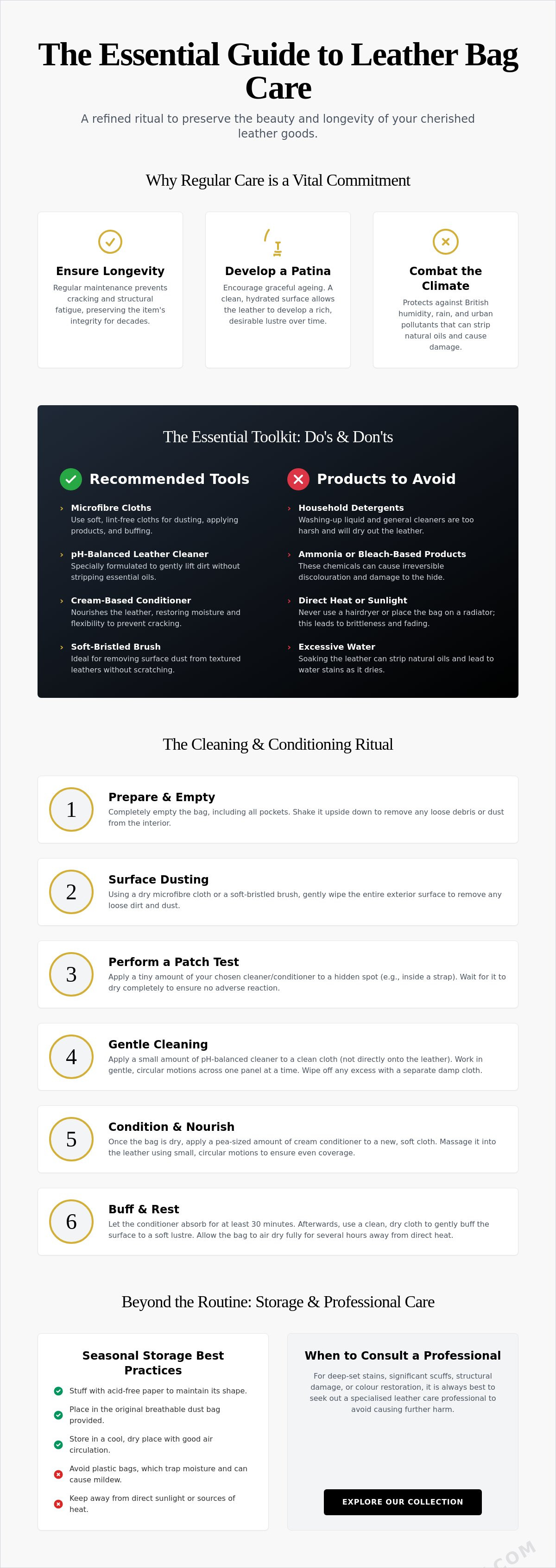
A Step-by-Step Guide to the Cleaning and Conditioning Ritual
The process of cleaning and conditioning leather bags is a rewarding ritual that deepens the connection between the owner and the object. It's an opportunity to inspect the craftsmanship of your piece, from the stitching of an Odette to the structure of a Maya, ensuring it remains in peak condition. When you approach this task with patience and the correct technique, you're not just maintaining an accessory; you're preserving a legacy of fine leatherwork. The secret lies in a gentle hand and the disciplined application of products.
Preparing and Cleaning the Surface
Surface preparation is the critical first step to avoid rubbing grit into the leather. Begin by removing all personal items from the interior and gently shaking the bag upside down to dislodge any debris. Use a soft brush to clear dust from the crevices and seams. Don't overlook the hardware; a quick wipe of the zips and buckles with a dry cloth prevents the build-up of urban pollutants that can cause tarnishing. If the lining is fabric, pull it outwards where possible to give it a light brush, ensuring the entire piece is refreshed.
When you're ready to clean, apply a small amount of your pH-balanced solution to a microfibre cloth. Never apply any liquid directly onto the leather surface. Use light, circular motions to lift dirt, focusing on areas that see the most contact, such as handles and corners. Be careful not to over-saturate the material. Once the surface is clean, allow the leather to air dry naturally in a cool, well-ventilated space. Avoid the temptation to use a radiator or hairdryer, as artificial heat sources are the primary cause of leather becoming brittle and cracked.
Conditioning and Buffing for a Refined Finish
Once the bag is completely dry, it's time to replenish its natural oils. In the world of cleaning and conditioning leather bags, the "less is more" rule is paramount. Applying too much conditioner can lead to a tacky surface that actually attracts more dust. Dab a pea-sized amount of cream onto a clean cloth and massage it into the leather using unhurried, circular strokes. This allows the fibres to absorb the moisture they need to remain supple without compromising the bag's architectural integrity.
Buffing is the final act of stewardship. After the conditioner has rested for several minutes, use a fresh, dry cloth to buff the surface. This technique enhances the natural lustre of the hide without creating an artificial, plastic-like shine. We recommend waiting at least half an hour before using the bag again, allowing the treatment to settle fully. If you're looking to add a new investment piece to your repertoire, we invite you to browse our handcrafted leather handbags to find a companion that will benefit from this dedicated care ritual.
Beyond the Surface: Professional Maintenance and Seasonal Storage
The journey of stewardship extends far beyond the immediate act of cleaning and conditioning leather bags. It encompasses the quiet hours when your favourite piece is not in use. Given that many investment items spend a significant portion of their life in repose, the environment in which they rest is just as vital as the products used to treat them. Rotating your collection is a simple yet effective way to ensure even wear. Constant use of a single piece can lead to leather fatigue, particularly at the points of highest tension, such as the handles and base corners. By allowing a bag to rest, you give the fibres time to recover their shape and breathability.
The Art of Seasonal Storage
In our damp British climate, moisture is the primary antagonist of fine leather. You should never store your bags in plastic containers or non-breathable synthetic bags. These trap humidity and can lead to the growth of mould or mildew, which is notoriously difficult to remove without damaging the finish. Instead, always utilise a breathable cotton dust bag to shield the surface from light damage and dust accumulation. This simple step preserves the original aesthetic and prevents the leather from becoming dull due to environmental pollutants.
Maintaining the silhouette of your bag whilst it is tucked away is equally essential. We recommend using acid-free tissue paper for structural stuffing. Avoid using old newspapers, as the ink can easily transfer to the lining, causing permanent staining. Stuff the bag sufficiently so it stands tall without being overstretched; this prevents the leather from developing deep creases or "slumping" over time. Ideally, your dressing room or wardrobe should maintain a stable temperature and a humidity level of approximately 45% to 55% to keep the leather from drying out or absorbing excess moisture.
Professional Care and Concierge Services
Whilst routine maintenance is a personal joy, there are moments when the expertise of a specialist is required. Deeply embedded stains, such as ink or oil, or structural issues like worn piping and loose stitching, should always be handled by a professional. We often suggest an annual check-up for your most prized items, much like a fine timepiece. This proactive approach allows a specialist to identify microscopic wear before it becomes a significant repair, ensuring the structural integrity of the piece remains uncompromised.
A beautifully maintained bag is the cornerstone of a sophisticated aesthetic. Once you have mastered the art of cleaning and conditioning leather bags, you can confidently pair your pristine accessories with our luxury occasion wear for a truly polished ensemble. If you require bespoke advice on the care of a specific finish or wish to discuss restoration options, please do not hesitate to contact our team. We take genuine pleasure in assisting our clients with the continued care of their investment pieces, ensuring they remain a source of pride for many years to come.
Preserving the Legacy of Your Collection
Mastering the art of cleaning and conditioning leather bags ensures that your most cherished accessories remain as vibrant and supple as the day they were first acquired. By embracing a ritual that prioritises pH-balanced products and unhurried techniques, you shield your investment from the rigours of the British environment. True stewardship continues into the wardrobe; utilising cotton dust bags and structural stuffing preserves the silhouette and surface integrity of your pieces for decades to come.
Since 2004, our commitment to expert craftsmanship has defined every piece we create. Each item is proudly handcrafted in the UK, reflecting a heritage of quality that we invite you to experience firsthand at our boutiques in Knightsbridge and Burlington Arcade. We take professional joy in helping you maintain the lustre of your wardrobe and ensuring your pieces endure. Discover the full collection of handcrafted leather handbags at Lalage Beaumont and find a companion that is truly built to last. With the right care, your collection will tell a story of elegance and endurance for many years to come.
Frequently Asked Questions
How often should I clean and condition my leather bag?
You should aim to clean and condition your leather bag every three to six months, depending on how frequently it's carried. If the bag is a daily companion, a quarterly ritual ensures the hide remains supple and resilient. For pieces reserved for special occasions, a biannual treatment is usually sufficient to maintain the lustre. Regular attention prevents the fibres from drying out, especially during the winter months when central heating is most prevalent.
Can I use baby wipes to clean my leather handbag?
We strongly advise against using baby wipes on your fine leather accessories. Whilst they seem convenient, many wipes contain alcohol, fragrances, and chemicals that can strip the leather's protective finish or cause permanent discolouration. These products aren't pH-balanced for organic hides. Instead, always choose a specialist cleaning solution designed specifically for the task of cleaning and conditioning leather bags to preserve the material's natural integrity.
Will conditioning my bag make the leather darker?
Conditioning may temporarily darken the leather as the moisture is absorbed into the fibres. In most cases, the original hue returns once the product has fully dried and settled. However, some oils can lead to a permanent change in tone, particularly on porous or light-coloured leathers. This is why a discreet patch test on an inconspicuous area, such as the base, is a non-negotiable step before treating the entire piece.
How do I remove water stains from leather after a rainstorm?
If your bag is caught in a downpour, the most effective approach is to blot the surface gently with a dry, lint-free cloth. Avoid rubbing the spots, as this can push moisture deeper into the grain and cause distortion. Allow the bag to dry naturally at room temperature. If faint water marks remain once dry, a light application of a high-quality conditioner can often help to blend the surface and restore a uniform appearance.
What is the best way to store my bag when not in use?
Your bag should be stored in a breathable cotton dust bag, away from direct sunlight and heat sources. We recommend stuffing the interior with acid-free tissue paper to maintain its silhouette and prevent structural creasing. Ensure the storage area is well-ventilated to avoid any build-up of humidity. Avoid hanging the bag by its straps for long periods, as this can lead to permanent stretching of the leather or handles.
Is it possible to over-condition leather?
It's certainly possible to over-condition your bag, which can lead to a tacky or greasy surface. Excessive product can clog the pores of the leather, preventing it from breathing and potentially attracting more urban pollutants. A "less is more" approach is always best. If you find the leather no longer absorbs the cream or feels sticky after buffing, you've likely exceeded the frequency required for cleaning and conditioning leather bags.
How do I clean the metal hardware on my designer bag?
You can maintain the brilliance of the metal hardware by wiping it gently with a dry microfibre cloth after each use. This removes oils and salts from your skin that can cause tarnishing over time. Avoid using abrasive metal polishes or liquid cleaners, as these can accidentally seep into the surrounding leather and cause damage. For stubborn marks, a very slightly damp cloth followed by immediate drying with a soft towel is usually sufficient.
Can I use a hairdryer to speed up the drying process?
You should never use a hairdryer or any artificial heat source to dry your leather goods. Rapid drying causes the leather to shrink and become brittle, often leading to irreversible cracking of the fibres. Patience is a vital part of the preservation ritual. Always allow your bag to dry naturally in a cool, shaded environment, ensuring it's placed on a flat surface to maintain its original shape and structural integrity.