


A high price tag is often mistaken for a guarantee of excellence, yet true quality is found in the structural integrity of the hide rather than the label stitched inside. If you've ever felt the disappointment of a favourite accessory peeling or cracking within a year, you know that price and performance don't always align. Understanding exactly what to look for in a quality leather handbag is the only way to ensure your next purchase becomes a treasured heirloom rather than a temporary disappointment.
We believe that your wardrobe should be a collection of pieces that age with grace and quiet confidence. It's a pleasure to share the secrets of identifying superior craftsmanship, helping you avoid the frustration of stiff, plastic-feeling materials and hardware that quickly loses its lustre. This guide will provide the essential knowledge needed to select a leather handbag that serves as a true lifetime investment. We'll explore the nuances of full-grain leather, the importance of structural stitching, and the refined details found in exceptional pieces like our Maya or Alicia handbags.
Key Takeaways
- Learn to distinguish between superior full-grain hides and the misleading marketing of "genuine leather" to ensure your piece develops a beautiful, natural patina.
- Discover how to identify professional construction through the presence of hand-finished edges and the lasting durability of traditional saddle stitching.
- Understand why solid brass and stainless steel hardware are essential markers of a true investment piece compared to lightweight, plated alternatives.
- Master exactly what to look for in a quality leather handbag by performing a sensory evaluation of the material's "hand" and the bag's structural balance.
- Gain insight into selecting silhouettes and colours that offer enduring versatility across your formal social calendar, from weddings to prestigious professional engagements.
Examining the Raw Material: Leather Grades and Tanning Methods
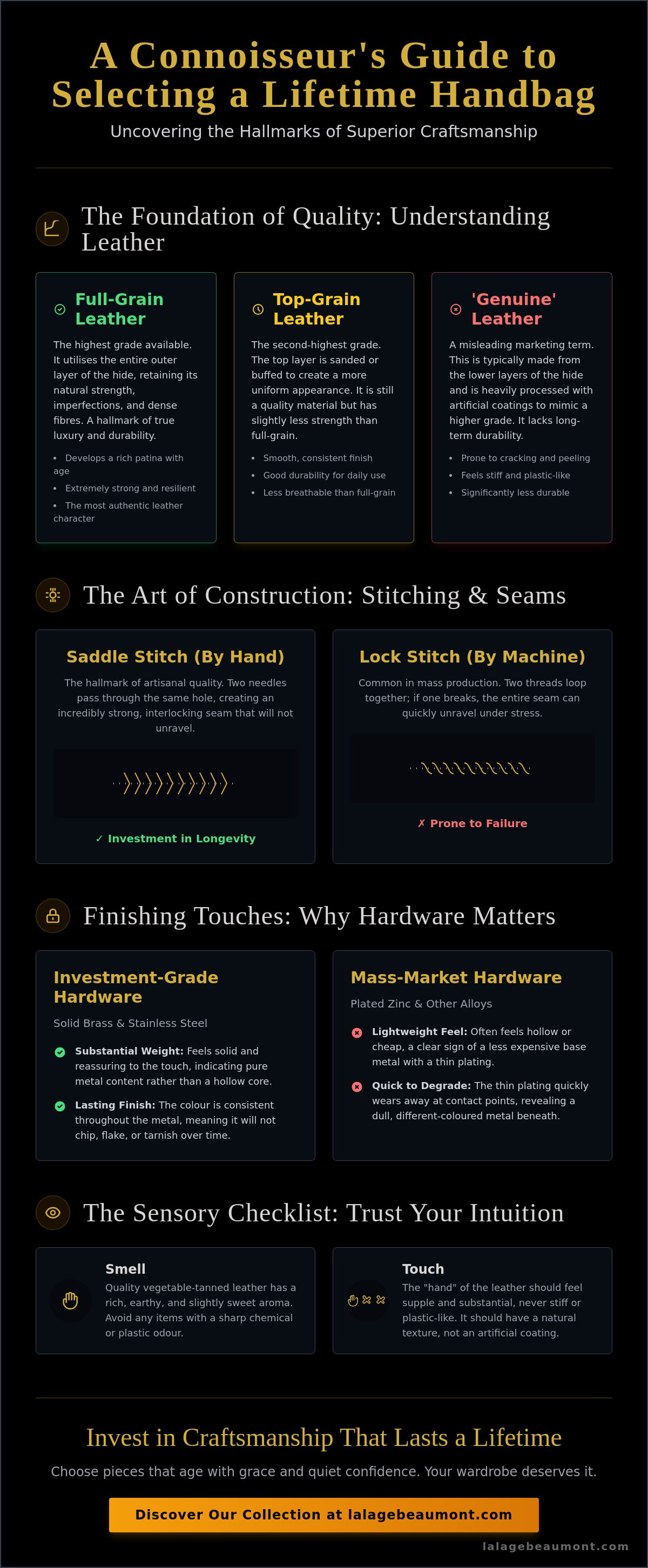
The journey toward a lifetime investment begins with the hide itself. When considering what to look for in a quality leather handbag, the grade of the material is the most significant factor in determining how the piece will withstand the rigours of daily life. As leather is anticipated to maintain a dominant 55.16% share of the handbag market in 2026, discerning the difference between mass-market materials and artisan quality is more vital than ever. Full-grain leather is the gold standard. It represents the outermost layer of the hide, left entirely intact with its natural grain and strength. Unlike inferior grades, it hasn't been sanded or buffed to remove imperfections, which means the fibres remain dense and resilient.
You should be wary of the term "genuine leather." Whilst it sounds reassuring, it's often a marketing term used to describe the lower layers of the hide that remain after the premium top layers have been split away. These layers lack the natural structural integrity of the surface and are often heavily treated with artificial finishes to mimic a higher grade. This is why such bags often crack or peel within a few seasons. For a piece that offers true longevity, bovine leather is particularly favoured for its robust nature and the graceful way it softens with age.
The method of preservation is equally vital to the final character of the piece. Most mass-market goods rely on chrome tanning, a chemical-heavy process that is quick but often leaves the leather feeling cold and synthetic. In contrast, traditional vegetable tanning methods use natural tannins derived from bark and leaves. This artisanal approach is not only kinder to the environment but results in a material that is breathable and rich in character.
Full-Grain vs Top-Grain: The Longevity Factor
Full-grain leather is unique because it develops a magnificent patina, a soft sheen that deepens with use and tells the story of the bag's journey. Top-grain leather, whilst still high quality, has had the very top layer sanded away to create a more uniform appearance. This process removes some of the hide's natural strength and its ability to age as beautifully as a full-grain alternative. You can learn more about these distinctions by browsing our handbag collection, where grain integrity is always a priority.
The Scent of Quality: Identifying Tanning Processes
Your sense of smell is a powerful tool when evaluating a potential purchase. A high-quality, vegetable-tanned bag will possess a rich, earthy, and slightly woody aroma that is instantly recognisable. You should avoid any item that carries a sharp, chemical, or plastic-like scent, as this often indicates heavy synthetic coating or low-grade processing. When learning what to look for in a quality leather handbag, remember that your nose can often detect shortcuts that the eyes might miss. The delicate, sweet scent of high-quality leather is a natural signature of the organic tannins used during the traditional curing process.
The Art of Construction: Stitching and Structural Integrity
Whilst the hide provides the foundation for any investment piece, the architecture of the construction determines its ultimate lifespan. When considering what to look for in a quality leather handbag, one must look beyond the surface to the intricate joinery that holds the silhouette together. A master craftsman understands that a bag is a functional sculpture; it must maintain its refined form even when carrying your daily essentials through a busy social calendar. This structural permanence is achieved through meticulous attention to detail that mass production simply cannot replicate.
The hallmark of superior construction is the traditional saddle stitch. Unlike a machine-produced lock-stitch, which uses two threads that loop around each other and can unravel entirely if a single link breaks, a saddle stitch involves two independent needles passing through the same hole from opposite sides. This creates a resilient bond. If a thread were to snap, the integrity of the seam remains intact. Such techniques are essential for a piece that is intended to be cherished for a lifetime.
Structural integrity also depends on the internal reinforcements that remain invisible to the eye. High-stress areas, such as where the handle meets the body, require internal supports to prevent the leather from stretching or tearing. A well-constructed bag, such as the Coppelia or the Odette, will often feature a discreet base plate. This internal architecture ensures the bag retains its elegant, upright profile and prevents the unappealing sagging often seen in inferior goods. It is this dedication to traditional methods that we invite you to explore amongst our handbag collection.
Evaluating Stitching Patterns
Examine the stitch line closely for a subtle, elegant slant to each stitch, which is a common indicator of traditional hand-sewing. You should also look for consistent stitch density, typically between seven and twelve stitches per inch. This level of precision suggests a meticulous craftsman. High-stress points must be secured with reinforced 'X' or box stitching to ensure the handles remain secure regardless of the bag's contents. Avoid any piece with loose threads or uneven spacing, as these are precursors to structural failure.
Edge Painting and Finishing
The treatment of raw edges is a definitive test of an artisan's skill. In mass-market production, edges are often disguised with a thick, heat-sealed plastic trim that eventually peels or cracks. In contrast, a premium finished edge is smoothed, sanded, and treated with multiple thin layers of specialized lacquer. This process, known as edge painting, creates a supple, rounded finish that moves naturally with the leather. When you run your fingers along the edge, it should feel perfectly smooth and substantial, never cold or waxy.
Hardware and Internal Finishes: The Mark of True Excellence
Whilst the leather and stitching form the body of a piece, the metalwork serves as its jewellery. When discerning what to look for in a quality leather handbag, the composition of the hardware is a primary indicator of enduring value. Solid brass or stainless steel should always be preferred over plated zinc or plastic alternatives. These premium materials possess a substantial weight that you can feel amongst your fingers, signifying a strength that won't snap or tarnish after a single season of use. High-quality hardware maintains its lustre, developing a soft character over time that complements the ageing leather.
Functionality is as vital as aesthetics. For instance, the presence of metal "feet" or studs on the base is a hallmark of thoughtful, protective design. These small additions elevate the bag, shielding the delicate grain from abrasive surfaces and moisture whenever it is placed down. It's a subtle detail that significantly extends the life of a piece, ensuring that your investment remains as pristine as the day it was first carried. Every component, from the buckles to the rings, should feel integrated and secure, reflecting a commitment to excellence that mass-produced items often lack.
The 'Zip Test' for Smooth Operation
A zip should never be a source of frustration. Metal zips with individually polished teeth offer a level of smoothness that mass-produced plastic versions cannot match. When you test the closure, it should glide effortlessly without catching the lining or requiring force. The puller must be ergonomically designed, feeling secure and balanced; it's one of the most frequently used components of the bag and must be built to last. A snagging zip is often the first sign of a bag that hasn't been crafted with longevity in mind.
What Lies Beneath: Linings and Pockets
The interior of a bag should be as refined as the exterior. Premium linings such as suede, silk, or high-grade cotton provide a soft, protective environment for your belongings, whereas polyester often feels cold and can fray easily. Choosing a light-coloured lining is a practical luxury. It allows you to find your essentials with ease whilst providing additional structural support to the bag's frame. For more insights on British craftsmanship, you may find our Handcrafted Leather Handbags UK: The Ultimate Guide particularly illuminating. An organised interior with dedicated pockets ensures that your daily essentials are kept in perfect order, reflecting the poised lifestyle of the woman who carries it.
Sensory Evaluation: How to Identify Premium Craftsmanship by Touch
Whilst the eyes may be charmed by an elegant silhouette, your fingertips often provide the most honest assessment of a piece's true nature. Understanding what to look for in a quality leather handbag involves evaluating the 'hand' of the material, a term used by artisans to describe the tactile sensation of the hide. Premium leather should feel supple and warm to the touch, reflecting the organic nature of the material. If a bag feels cold, waxy, or resembles the texture of plastic, it is likely that the hide has been heavily coated in synthetic pigments or is a low-grade split leather.
Weight is another subtle indicator of substance. A quality bag possesses a balanced weight that suggests the density of full-grain leather and the presence of solid metal hardware. However, it should never feel cumbersome or leaden. This balance is a result of the master craftsman's ability to reinforce the structure without adding unnecessary bulk. You might also consider a discreet 'scratch test' on a sample swatch; high-quality leather will often show a temporary mark that can be buffed away with the warmth of your thumb, whereas synthetic surfaces will either resist the mark entirely or suffer permanent damage.
We invite you to experience the tactile excellence of our handcrafted handbag collection and feel the difference that authentic craftsmanship makes to your daily wardrobe.
The Suppleness Factor
Premium leather should possess a natural elasticity, giving slightly under pressure but returning to its original shape almost immediately. You should be cautious of bags that feel exceptionally stiff or rigid. This often indicates the use of heavy cardboard fillers or bonded materials to maintain a silhouette that the leather itself cannot support. Bovine leather feels substantial and resilient, whereas synthetic PU often feels thin, overly uniform, and lacks the breathable warmth of a natural hide.
Visual Cues of Authenticity
Natural variations in the grain are a seal of authenticity rather than a flaw. Look for slight differences in the pore structure or tiny growth marks, which prove the hide has not been over-processed. Perfectly uniform 'leather' is frequently a sign of heavy pigment coating or a stamped pattern used to hide inferior hide quality. A truly superior bag won't just look beautiful on the day of purchase; it will develop a soft glow and a unique patina through regular use, a transformation that only occurs with the finest natural materials.
Longevity and Versatility: Selecting a Handbag as a Wardrobe Investment
Investing in a fine accessory is a commitment to a standard of elegance that transcends the fleeting nature of seasonal trends. When you understand exactly what to look for in a quality leather handbag, you transition from being a consumer of fashion to a curator of a personal legacy. A truly superior piece doesn't merely exist within your wardrobe; it anchors it, providing a reliable sense of poise for every significant event on your calendar. This longevity is the result of the grain integrity and structural architecture we've explored, ensuring your piece remains as relevant in twenty years as it is today.
A structured silhouette is perhaps the most vital element for a lifetime investment. Whilst softer, slouchy styles may appeal for a season, they often lose their form and professional edge over time. In contrast, a well-defined frame, such as that found in the Manon or the Mignon, maintains its architectural grace despite frequent use. Choosing classic, nature-inspired tones like deep navy, warm tan, or soft clay ensures that your bag remains a versatile companion for years to come. These earthy hues develop a magnificent depth, allowing the natural patina to tell a story of refined experiences and impeccable taste.
Styling for the British Social Calendar
A quality handbag is the finishing touch that elevates a formal ensemble, especially for prestigious events like Royal Ascot or summer garden parties. A structured leather piece provides a sophisticated counterpoint to the delicate textures of mother of the bride outfits, offering a grounded sense of tradition. For cooler days, pairing these artisanal bags with designer tweed jackets creates a look of quiet confidence that is quintessentially British. We invite you to explore our collection of handcrafted handbags to find the perfect silhouette for your next engagement.
The Value of British Craftsmanship
Selecting a bag crafted in traditional London workshops ensures a level of quality control that mass production can never achieve. Local production isn't only about heritage; it's about the accountability of the artisan and the ethical endurance of the product. Buying one "forever" bag is a sustainable choice that honours the skill of the craftsman and reduces the environmental impact of frequent replacements. To maintain this investment, we recommend regular cleaning with a soft, dry cloth and storing your piece in its protective dust bag when not in use. This simple behaviour ensures that the leather remains supple and the hardware retains its lustre for generations.
We would be delighted to welcome you to our Burlington Arcade boutique, where you can experience these markers of quality in person. Our expert team takes genuine pleasure in providing professional assistance, helping you select a piece that will become a cherished part of your wardrobe's history.
Selecting Your Forever Piece
Choosing an accessory that will accompany you through life's most prestigious moments is a rewarding endeavour. By prioritising the integrity of full-grain bovine leather and the resilience of traditional saddle stitching, you ensure your selection is built for endurance. Mastering the knowledge of what to look for in a quality leather handbag allows you to invest with absolute certainty, moving beyond fleeting fashion toward a personal legacy of style.
Every piece in our collection is a testament to traditional British design, meticulously handcrafted in artisan workshops to ensure the highest standards of quality control. From the substantial feel of solid hardware to the refined internal finishes, these details distinguish a true investment. We invite you to Discover the Handcrafted Handbag Collection and find a silhouette that perfectly complements your wardrobe. We look forward to assisting you in finding a piece that will be cherished for generations to come.
Frequently Asked Questions
How can I tell if a handbag is made of real leather or PU?
Real leather possesses a distinctive, organic warmth and a subtle earthy aroma that synthetic materials cannot replicate. You should examine the grain for tiny natural irregularities; synthetic PU is produced in sheets and often appears too perfect or repetitive. Whilst leather absorbs a minute amount of moisture, water will simply bead on the surface of a plastic-based bag, which often feels cold and smells of chemicals.
What is the difference between full-grain and genuine leather?
Full-grain leather is the finest grade available, utilising the entire top layer of the hide to ensure maximum durability and a beautiful ageing process. Conversely, "genuine leather" is a technical term for the lower, split layers of the hide. These layers lack the natural strength of the surface and are usually coated with a plastic-like finish to mimic quality, which eventually leads to cracking and peeling.
Why do some high-quality leather bags smell sweet?
This sweet, woody scent is a hallmark of traditional vegetable tanning. The process uses organic materials such as mimosa, chestnut, or oak bark to preserve the hide over several weeks. Unlike the harsh chemical odour found in mass-market chrome-tanned goods, this natural aroma is a pleasant sign of a bag that's been treated with care and respect for heritage artisan traditions.
How many years should a quality leather handbag last?
A piece crafted from premium materials should endure for decades and is often passed down amongst generations as a cherished heirloom. Its lifespan depends on the integrity of the construction and the quality of the hide used. When you know what to look for in a quality leather handbag, you're selecting an investment that will maintain its elegance and structural form throughout your entire professional life.
Is a heavier leather bag always better quality?
Weight is often a sign of substance, indicating the use of dense full-grain hide and solid metal hardware rather than hollow alternatives. However, a bag should never feel cumbersome or leaden. The best quality pieces strike a balance between a reassuring weight and a refined silhouette. If a bag feels unexpectedly heavy, it might contain thick cardboard reinforcements rather than high-quality leather.
What kind of stitching is strongest for a luxury handbag?
Traditional saddle stitching is the most resilient technique used in fine leatherwork. This method involves two needles passing through each hole in opposite directions, creating a seam that won't unravel even if a thread is damaged. It requires significant skill and time to execute. This makes it a reliable indicator of a bag that's been built to withstand the rigours of a busy social calendar.
Can I remove scratches from a high-quality leather bag?
Most surface marks on premium leather can be gently buffed out using a soft cloth or the warmth of your fingertips. The natural oils within full-grain leather allow it to "heal" over time, which contributes to its unique character. This is why a quality bag looks better with age, whereas synthetic materials will show permanent damage from even the slightest abrasion or daily wear.
Why is vegetable-tanned leather considered more prestigious?
Vegetable tanning is prestigious because it's an unhurried, artisanal method that results in a superior, breathable material. It's a vital detail to consider when deciding what to look for in a quality leather handbag, as it allows the piece to develop a magnificent patina. This process is also more environmentally responsible, using natural tannins derived from plants instead of aggressive industrial chemicals.