


A single raindrop on a cherished leather surface is not a sentence of permanent ruin, but rather an invitation to practice the delicate art of restoration. It’s entirely natural to feel a sense of trepidation when a sudden downpour marks your favourite Alicia Handbag or a finely crafted leather wallet, leading you to wonder how to remove water stains from leather without causing further damage. You likely fear that the wrong treatment might dull the natural lustre of the hide or leave a permanent tide mark that traditional cleaning cannot erase. We understand this concern deeply; we delight in assisting our clients as they maintain the timeless elegance of their most treasured investment pieces.
In this guide, you will discover the professional techniques required to rebalance moisture and restore the pristine finish of your finest garments and accessories. We shall provide a clear methodology for identifying your specific leather finish and applying gentle, effective treatments to achieve a perfectly uniform surface once more. By following these refined steps, you’ll gain the confidence to handle premium materials and learn how to safeguard your collection against the unpredictable British weather with sophisticated preventative care.
Key Takeaways
- Understand the mechanics of a "tide mark" and how moisture displaces natural tannins, allowing you to treat the root cause of the blemish with precision.
- Master the "Water Drop Test" to accurately identify your leather's absorbency, ensuring you select the most appropriate restoration technique for your specific item.
- Acquire the professional sequence for how to remove water stains from leather using a measured approach that prioritises the long-term integrity of the material.
- Protect your collection by avoiding acidic "home remedies" like vinegar, which can cause irreversible structural degradation and bleaching of the hide.
- Establish a sophisticated preventative care routine using breathable protectants and soft dust bags to maintain the original lustre of your cherished accessories.
Understanding the Science: Why Does Water Stain Premium Leather?
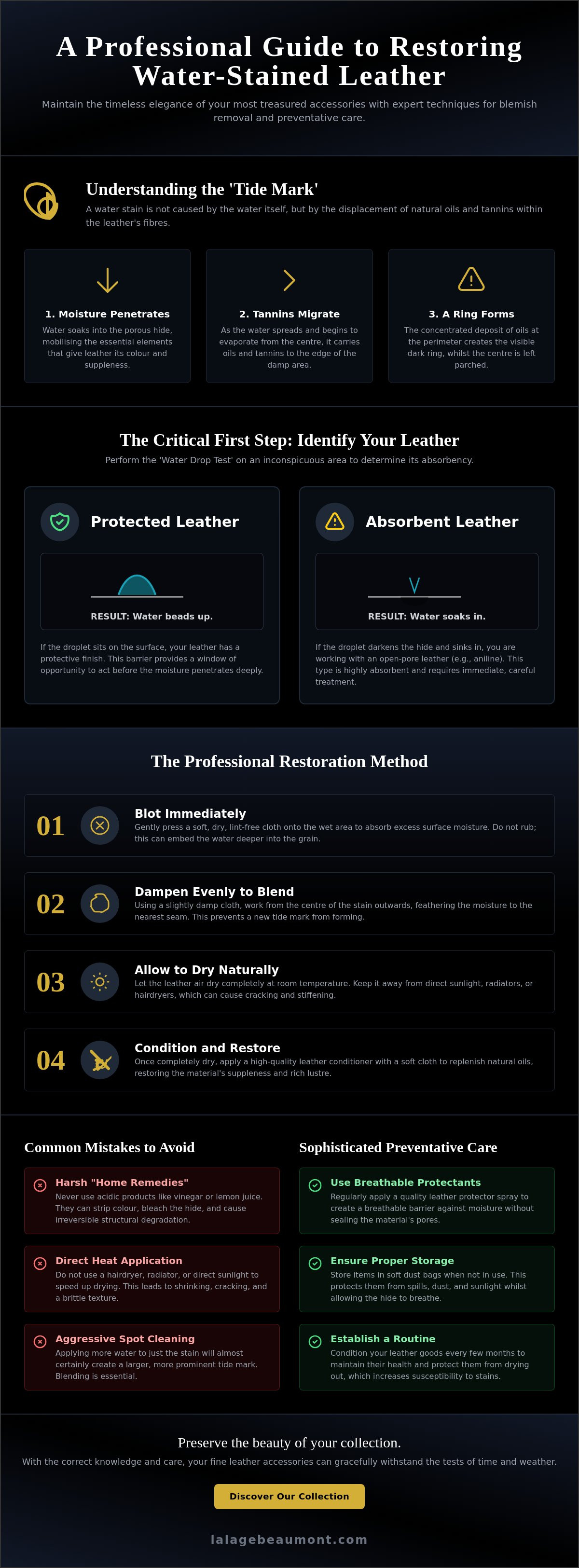
To truly master how to remove water stains from leather, one must first appreciate the delicate chemistry of the material itself. A water stain, often referred to as a "tide mark" amongst restoration experts, is rarely caused by the water alone. Instead, it’s the result of a physical displacement within the hide. When moisture penetrates the fibres, it mobilises the natural oils and tanning agents that give the leather its supple texture and rich colour. As the water evaporates from the centre outward, it carries these essential elements to the edge of the wet spot, depositing them in a concentrated ridge. This leaves the centre parched and the perimeter darkened, creating the unsightly ring we recognise as a stain.
The composition of the water itself plays a significant role in the severity of the mark. Tap water often contains minerals like calcium and magnesium; these inorganic substances remain behind as a crystalline residue once the moisture has vanished. Whilst soft rainwater is slightly more forgiving, it still triggers the migration of tannins. Attempting to "spot clean" a single mark by applying more water to the area typically exacerbates the issue. It simply creates a new, wider boundary for the oils to settle, resulting in a larger ring than the one you initially sought to resolve. Understanding these mechanics is the vital first step for anyone seeking how to remove water stains from leather effectively.
The Role of Porosity in Fine Hides
The susceptibility of a piece depends largely on its finish. Open-pore leathers, such as aniline, possess no protective topcoat, making them exquisitely soft but highly absorbent. A surface splash on an Alicia Handbag crafted from such material can become a deep saturation within seconds. In contrast, pigmented or grained leathers offer a brief window of protection, as the finish acts as a temporary barrier. The depth to which the moisture travels determines how quickly the stain sets into the internal fibres of the hide, influencing the restoration approach required.
Tannin Migration and pH Imbalance
Leather is a product of precision, with a specific pH balance achieved during the tanning process. Water disrupts this equilibrium, causing a localised pH shift that can stiffen the leather fibres. The dark ring is a visual representation of this imbalance; it’s a dense collection of dyes and lubricants that have been "pushed" out of place. Acting whilst the leather is still slightly damp is often the most effective way to encourage these tannins to redistribute evenly across the surface, preventing a permanent mark from forming. We find that a deeper understanding of these processes allows our clients to care for their investment pieces with greater serenity.
Identifying Your Leather Type Before You Begin
Before you attempt any restoration, you must identify exactly which material you're handling. Treating an exotic skin with the same method as a patent finish is a recipe for disappointment. The most reliable way to assess the situation is through the "Water Drop Test." Simply place a tiny droplet of distilled water on an inconspicuous area, perhaps the base or inside a pocket. If the water beads and sits on the surface, your leather has a protective finish. However, if the droplet darkens the hide and sinks in, you are working with an open-pore leather. This distinction is vital when learning how to remove water stains from leather, as it dictates whether you'll be working on the surface or within the fibres.
The finish of the hide, whether it be a high-gloss patent, a soft matte, or a shimmering metallic, also informs your strategy. Patent leather is virtually impermeable and usually only requires a gentle buffing with a dry cloth. Matte finishes, however, are more prone to absorbing oils and moisture. If you're ever in doubt about the specific requirements of your item, we're always delighted to offer guidance on our collection of leather accessories to ensure your pieces remain in pristine condition.
Smooth and Grained Calfskin
Many of our handcrafted leather handbags are fashioned from premium calfskin, known for its tight, resilient grain. Grained leathers, such as those with a refined pebble or "palmellato" texture, are particularly adept at disguising minor imperfections. Because the surface is not perfectly flat, moisture often sits atop the texture rather than immediately penetrating the core. This gives you a precious few moments to act before a stain sets. In contrast, smooth calfskin demands immediate attention; its uniform surface will highlight even the smallest tide mark with unforgiving clarity.
Suede, Nubuck, and "Naked" Leathers
Suede and nubuck are entirely different prospects. These "naked" leathers possess a velvet-like nap that is easily damaged by traditional liquid cleaners. Knowing how to remove water stains from leather with a nap requires a different mindset entirely. If you discover a mark on a suede accessory, put away the damp cloths. These materials require a "dry" restoration approach using specialist brushes and erasers to lift the stain without flattening the delicate fibres. Using moisture on suede often results in a permanent change to the texture, leaving the area stiff and lifeless. Identifying this texture early ensures you don't inadvertently ruin the very item you're trying to save.
The Professional Restoration Method: Step-by-Step
Restoring a piece to its former glory requires a measured approach and a selection of specific tools. To begin, you will need a bottle of distilled water; this is essential to avoid the mineral deposits found in common tap water. Alongside this, gather several lint-free microfibre cloths and a high-grade leather cream or conditioner. Before you apply any moisture, you must perform a thorough surface dusting. Using a dry, soft cloth, gently remove any abrasive dust or particles from the hide. Skipping this step risks rubbing grit into the grain, which can cause permanent scratches during the dampening process.
Once the surface is clear, you can proceed with the delicate task of rebalancing the moisture levels. This is the most critical stage in learning how to remove water stains from leather without creating new blemishes. The goal is not to soak the item but to gently encourage the fibres to accept a uniform level of hydration. Always test your technique on a small, hidden area first to ensure you're comfortable with the leather's reaction.
The Master Technique: Feathering
The "feathering" method is the secret to eliminating a tide mark with professional precision. Rather than scrubbing the stain, you should use a cloth that is damp but certainly not dripping. Starting from the centre of the water mark, wipe outward with light, sweeping motions. You must continue this process until you reach the nearest seams or natural edges of the panel. By dampening the entire section from seam to seam, you ensure that as the leather dries, it does so at an even rate. This prevents the tannins from settling into a new ring, effectively blending the original stain into the rest of the surface.
Drying and Setting the Shape
Patience is the ultimate restorer. Whilst it may be tempting to hasten the process with a hairdryer or by placing the item near a radiator, such intense heat sources are the primary enemy of luxury leather goods. Excessive heat strips away the remaining natural oils, leaving the hide brittle and prone to cracking. Instead, allow the piece to dry naturally in a cool, well-ventilated room away from direct sunlight.
To maintain the silhouette of your item, particularly if you are treating a structured piece like the Mignon Handbag, stuff the interior with acid-free tissue paper. This absorbs internal moisture whilst preserving the bag's elegant lines. We recommend following the "patience rule": allow at least 24 hours for the fibres to settle completely. Once the leather is dry to the touch, apply a small amount of premium leather cream to replenish the oils and restore the original lustre. Mastering how to remove water stains from leather is as much about the final conditioning as it is about the initial cleaning.
Common Mistakes and "Home Remedies" to Avoid
When searching for how to remove water stains from leather, you will undoubtedly encounter a plethora of "life hacks" that promise swift results with household staples. We must advise the utmost caution; many of these suggestions are profoundly detrimental to the longevity of premium hides. Vinegar is perhaps the most frequent offender. Whilst it is often lauded as a natural cleaner, its high acidity can aggressively break down the internal structure of the leather. Over time, this leads to a weakening of the fibres and a loss of the item's structural integrity. Similarly, substances like rubbing alcohol or nail polish remover act as potent solvents. These don't merely lift a stain; they dissolve the protective finishes and can cause irreversible bleaching of the original dye, leaving you with a pale, permanent scar.
The desire for a quick fix often leads people to reach for a hair dryer. This is a significant error. Forcing moisture out with concentrated heat causes the leather to shrink and stiffen, often resulting in a "crackle" texture that cannot be reversed. We also suggest avoiding baby wipes for your investment pieces. As of early 2026, new state-level regulations have highlighted the presence of complex chemicals, including PFAS, in many common cleaning products and wipes. These hidden ingredients can leave a sticky residue or react poorly with the tanning agents in fine leather, dulling the surface lustre permanently.
Why "Natural" Isn’t Always Better
It is a common misconception that kitchen-cupboard solutions like olive oil or butter can "re-oil" a dry water spot. In reality, these organic fats will eventually go rancid within the pores of the hide, leading to unpleasant odours and permanent, uneven darkening. Different types of leather possess unique chemical balances and require pH-neutral, specialised care products that are designed to nourish without suffocating the material. Using the wrong oil can saturate the fibres so deeply that the leather becomes heavy and loses its refined "hand."
The Risk of Over-Cleaning
Aggressive scrubbing is another pitfall to avoid. If you apply too much pressure in an attempt to "rub out" the mark, you may inadvertently burnish the leather. This creates a permanent shiny patch that stands out against the natural matte or grained finish of the surrounding area. Always maintain a light touch and recognise that restoration is a gradual process. If a stain remains stubborn after a gentle attempt, it may be time to seek professional intervention. Should you find that a cherished piece is beyond such measures, we invite you to explore our latest collection of handcrafted leather bags to find a new investment piece to cherish.
Preserving Longevity: Prevention and Professional Upkeep
While mastering the delicate process of how to remove water stains from leather is a valuable skill, the true connoisseur understands that prevention is the most graceful form of care. Establishing a routine of proactive maintenance ensures that your investment pieces, from a tailored coat to a Maya Handbag, retain their exquisite character for decades. We take immense pleasure in helping our clients navigate these small but significant rituals of preservation. A well-maintained collection doesn't just look better; it carries the story of its owner’s attention to detail and respect for traditional craftsmanship.
Creating a Protective Shield
The first step for any new acquisition is the application of a high-quality protector. This should be done before its inaugural journey into the unpredictable London rain. It’s vital to choose a product that provides a breathable barrier without altering the colour or texture of the hide. We recommend seeking water-resistant treatments rather than those marketed as entirely "water-proof." The latter often rely on heavy silicones or waxes that can clog the pores of the leather, eventually causing it to suffocate and lose its natural suppleness. As of January 1, 2026, many formulations have shifted to comply with new regulations regarding PFAS; choosing a modern, compliant protector ensures you’re caring for your item with the most advanced and responsible chemistry available.
Daily habits are equally influential in the longevity of your pieces. We always advise our clients to store their handbags in a soft, breathable dust bag when not in use to prevent the accumulation of abrasive particles. Equally important is the simple rule of avoiding direct floor contact, which protects the base from dampness and grit. Every six months, consider a conditioning ritual. This bi-annual refresh replenishes the natural oils that may have been lost to the air or light. Modern conditioners often include UV protection, which is increasingly important for preventing the subtle fading that can occur even in temperate climates.
Expert Care for Investment Pieces
There are moments when a DIY approach to how to remove water stains from leather is no longer sufficient. If you notice signs of persistent stiffness, fine cracking, or deep discolouration that doesn't respond to gentle treatment, it’s time to consult a professional leather restorer. These experts can perform deep moisture rebalancing and structural repairs that are beyond the scope of home care. A professional "refresh" service can significantly enhance both the sentimental and resale value of your collection. Ultimately, the quality of the craftsmanship in your favourite pieces deserves an equivalent standard of maintenance. We remain at your service to ensure your wardrobe continues to reflect the timeless elegance you’ve carefully curated.
Cultivating a Legacy of Timeless Care
Caring for fine leather is a testament to one's appreciation for artisanal quality and enduring style. By understanding the nuances of tannin migration and the importance of the "feathering" technique, you possess the knowledge required for how to remove water stains from leather with grace and precision. These methods ensure that a sudden change in the weather doesn't compromise the uniform finish or supple hand of your most cherished accessories. It's a rewarding process that honours the material's heritage and your own commitment to quality.
We take great pleasure in sharing our expert garment and accessory care advice to help you preserve the integrity of your wardrobe. Every piece we offer is handcrafted in artisanal workshops to the highest standards. To ensure your collection remains in pristine condition, we invite you to explore our exquisite range of handcrafted leather handbags designed for longevity. We'd be delighted to welcome you to our boutiques in Knightsbridge and Burlington Arcade to provide further assistance. With the right care, your investment pieces will continue to age beautifully and serve you for many years to come.
Frequently Asked Questions
Can water permanently damage a luxury leather bag?
Water can cause permanent damage if it leads to deep structural stiffening or if the drying process is forced with artificial heat. Whilst a surface splash is usually restorable, a deep saturation can displace tanning agents and natural oils permanently. It's often the incorrect cleaning attempt that causes the most lasting harm to a fine handbag, highlighting the need for a measured, professional approach to restoration.
Is it safe to use a hair dryer to speed up the drying process?
You should never use a hair dryer or any artificial heat source on leather surfaces. Intense heat causes the fibres to shrink rapidly, resulting in a brittle texture and permanent "crackle" on the surface that cannot be reversed. Allow your item to dry naturally in a cool, well-ventilated space to preserve its original suppleness and ensure the hide remains healthy over time.
Does vinegar really remove water stains from leather?
Vinegar is not a safe solution for premium hides because its high acidity level can break down the leather's internal pH balance. Whilst some suggest it for general cleaning, it often strips the finish from high-quality leather and can cause the hide to become overly dry. This results in a dull appearance that is difficult to rectify, even with the application of high-grade conditioning creams.
How do I remove water marks from a suede handbag?
Suede requires a completely dry restoration method using a specialist suede brush or a cleaning eraser to lift the mark safely. Because suede lacks a protective topcoat, liquid treatments will often flatten the delicate nap or cause further discolouration. Gently brush the fibres in one direction to lift the stain and restore the velvet-like texture that is characteristic of high-quality suede and nubuck.
What is the best type of cloth to use for cleaning leather?
A clean, lint-free microfibre cloth is the superior choice for handling delicate leather surfaces during the restoration process. These cloths are designed to be soft enough to prevent scratches whilst being highly effective at lifting dust and moisture without leaving residue. Avoid using paper towels or old rags, as these can be surprisingly abrasive or leave behind fibres that complicate the cleaning process.
Should I condition my leather bag after removing a water stain?
You must always condition your leather after a restoration attempt to replenish the natural oils lost during the wetting and drying cycle. When learning how to remove water stains from leather, it's vital to remember that the process concludes with nourishment. A premium leather cream ensures the hide remains flexible and retains its refined lustre, preventing the fibres from becoming brittle and prone to cracking.
How can I prevent water stains on my leather goods in the future?
Prevention is best achieved through the regular application of a high-quality, breathable water-resistant spray that doesn't clog the pores of the hide. Store your leather wallets and handbags in their original dust bags to protect them from environmental moisture and grit when they aren't in use. Developing these small habits will safeguard your investment pieces against the unpredictable nature of the British weather and daily wear.
What should I do if my bag gets completely soaked in the rain?
If your bag becomes completely saturated, you should immediately stuff the interior with acid-free tissue paper to maintain its shape and absorb internal moisture. Do not attempt to wipe it aggressively; instead, blot any excess water with a soft cloth and allow it to dry naturally for at least 24 to 48 hours. Once dry, a thorough conditioning is essential to restore the leather's suppleness and health.