


Imagine stepping out of a car for the most significant meeting of your quarter, only to realise your jacket has surrendered to a web of stubborn wrinkles. It's a disheartening moment that many professionals face, where a choice of inferior material inadvertently undermines your carefully prepared presence. Finding the best fabrics for business attire is about more than just looking the part; it's about ensuring your wardrobe works as hard as you do, maintaining its shape and elegance through long commutes and back-to-back appointments.
We understand the frustration of garments that fail to breathe or lose their lustre after only a few visits to the dry cleaners. You deserve a collection of timeless investment pieces that offer both physical comfort and a sense of quiet authority. In this article, we'll share the secrets to selecting the finest natural fibres that promise longevity and effortless style. We'll examine the unique properties of wool, silk, and tweed, empowering you to build a professional wardrobe that reflects your commitment to quality and craftsmanship.
Key Takeaways
- Learn why natural fibres offer superior breathability and a more polished silhouette than synthetic alternatives in a professional environment.
- Identify the best fabrics for business attire by understanding the year-round versatility and structured elegance of British wool and tweed.
- Discover how to maintain your poise in warmer climates using the unique properties of mulberry silk and refined linen-silk blends.
- Master the technical aspects of textile quality, including how to evaluate fabric weight and weave for maximum garment longevity.
- Understand how bespoke made-to-measure services allow you to curate a unique wardrobe from an extensive library of premium cloths.
The Foundation of Formality: Why Fabric Choice Defines Professional Authority
Professional authority isn't solely about your credentials or the weight of your arguments. It begins with the silent signals your attire sends to every person in the room. The choice of material is the foundation of this visual dialogue. When you select the best fabrics for business attire, you're investing in a garment that maintains its composure whilst you navigate the complexities of your professional life. High-quality textiles suggest a level of expertise and self-respect that resonates in any corporate environment, from the quiet halls of a boutique firm to the height of a glass-walled boardroom.
The Psychology of Premium Textiles
The way a fabric feels to the touch, often referred to as its "hand," and how it catches the light provides an immediate impression of quality. Premium textiles possess a subtle lustre that mass-produced alternatives simply cannot replicate. A structured silhouette, achieved through expert tailoring and robust natural fibres, commands respect. It suggests an attention to detail and a commitment to excellence that reflects your own professional standards. Choosing understated luxury over generic, high-street apparel ensures your presentation remains timeless rather than fleeting. This quiet confidence is essential for those who value longevity and heritage in their wardrobe.
Natural vs Synthetic: The Professional Verdict
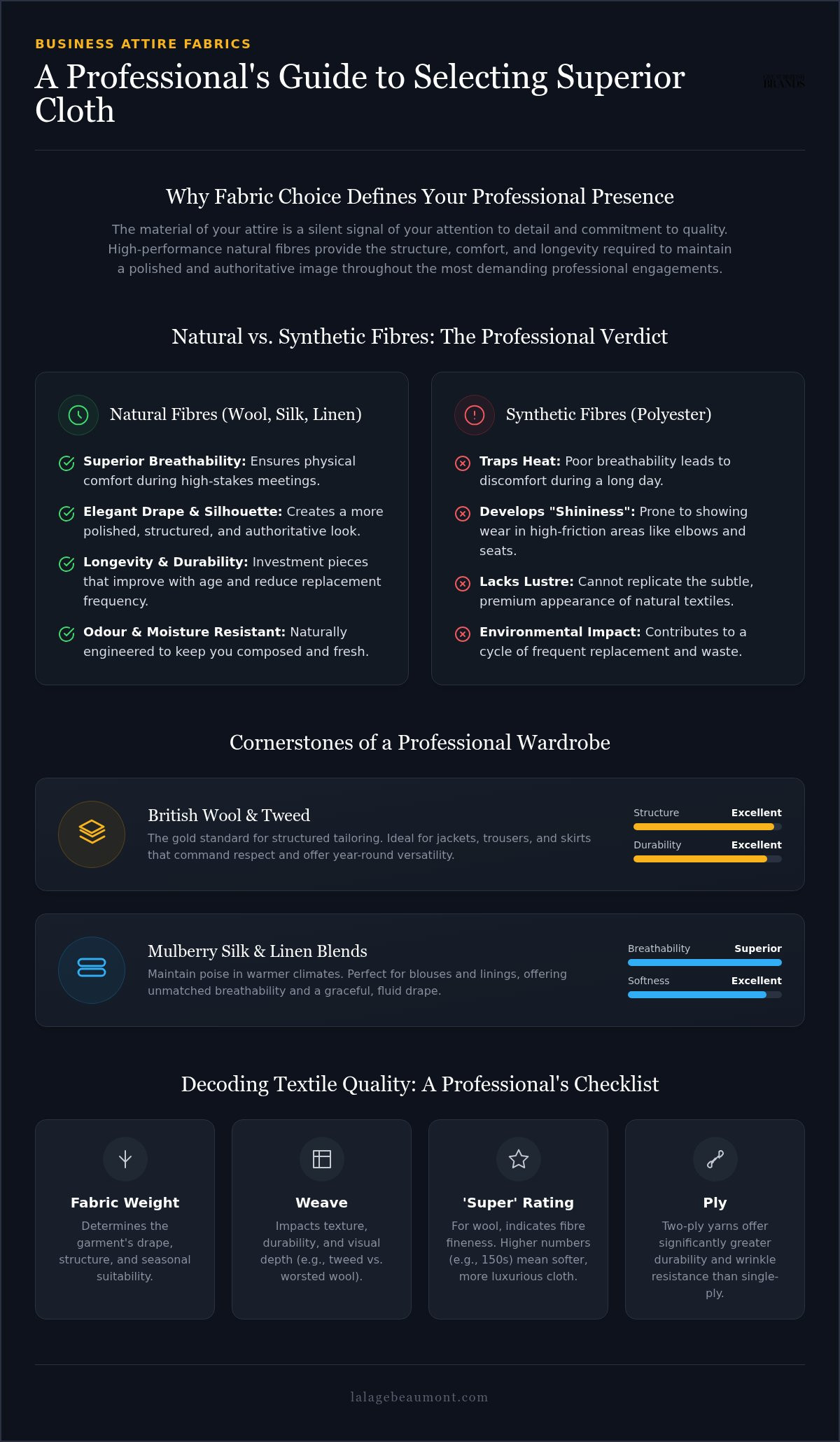
Synthetic materials like polyester often fail the rigours of a demanding professional day. They tend to trap heat, which causes discomfort during high-stakes negotiations, and they frequently develop a "shiny" appearance on high-friction areas like elbows and seats. In contrast, wool and silk remain the preferred choices for the modern executive. These natural fibres offer superior breathability and a graceful drape that actually improves with age. Beyond the aesthetic benefits, choosing natural textiles supports a more ethical approach to dressing. These long-lasting pieces reduce the need for frequent replacements, aligning your personal style with a sense of environmental responsibility.
Truly business-grade fabrics must balance three critical elements: structure, breathability, and wrinkle resistance. Whether you're attending a strategy meeting or a high-profile event on the social calendar, your clothing must remain crisp. Natural fibres, such as those featured in premium clothing collections, are naturally engineered to recover from movement. This ensures you look as fresh at an evening reception as you did at your first morning appointment. Selecting cloth from reputable mills is the first step in curating a wardrobe that stands the test of time and professional scrutiny.
British Wool and Tweed: The Gold Standard for Structured Tailoring
For the discerning London professional, British wool represents the pinnacle of sartorial integrity. It isn't merely a choice of material; it's an embrace of a heritage that values substance as much as style. Identifying the best fabrics for business attire often leads one back to the rolling hills of the British Isles, where wool production has been refined over centuries. Wool fibres possess a natural crimp, providing inherent stretch without the need for synthetic additives. This material is naturally moisture-wicking and odour-resistant, ensuring you remain composed even during the most taxing schedule.
When selecting your cloth, pay attention to the "Super" rating and ply. A higher Super number, such as Super 120s or 150s, indicates finer, softer fibres that offer a more luxurious drape. Similarly, two-ply fabrics, where two yarns are twisted together, provide significantly better durability and wrinkle resistance than single-ply alternatives. These technical details are what distinguish a garment intended for a lifetime of wear from a temporary fashion piece.
The Versatility of the Tweed Jacket
A designer tweed jacket is perhaps the most versatile investment a professional woman can make. Unlike flat, mass-market textiles, the unique multi-tonal weave of tweed adds depth and character to a monochromatic wardrobe. It's a fabric that speaks of tradition whilst feeling entirely relevant for modern leadership. Pairing these structured jackets with wide leg trousers creates a contemporary, commanding silhouette. This combination transitions gracefully from a formal morning presentation to an evening reception, allowing you to maintain your poise throughout the day.
Fine Merino and Worsted Wool
For those curating a collection of the best fabrics for business attire, worsted wool is an essential inclusion for sharp trousers and skirts. The combing process removes shorter fibres, resulting in a smooth, crisp finish that holds a press beautifully. Many executives prefer lightweight merino for its remarkable breathability, which is particularly beneficial in centrally heated offices where temperature control can be unpredictable. To keep your wool garments in pristine condition, we recommend using a soft clothes brush to remove surface dust after each wear. Giving your pieces a day of rest between outings allows the natural fibres to spring back to their original shape, preserving the garment's longevity. We take great pleasure in helping clients select the perfect weight for their specific professional needs within our tailored clothing collections.
Silk and Fine Linens: Maintaining Poise in Warmer Climates
Maintaining a crisp appearance during the summer months requires a strategic shift in your textile choices. Mulberry silk stands as the ultimate material for those seeking the best fabrics for business attire that don't compromise on elegance or comfort. Unlike synthetic alternatives, silk offers natural thermoregulation, keeping you cool during a humid morning commute whilst providing a sophisticated sheen that remains appropriate for the most formal boardroom. It's a fibre that feels as remarkable as it looks, offering a gentle touch that is particularly welcome during a long day of meetings.
The Elegance of the Silk Shift Dress
A silk shift dress serves as an impeccable foundation for the professional social calendar, effortlessly transitioning from a focused office environment to a summer evening event. It's essential to understand the nuances of silk weights to ensure your garment performs as expected. Whilst a delicate habotai might suit a light blouse, a more substantial crepe de chine or silk morocain provides the necessary opacity and drape for a tailored dress. To complete a coordinated look, consider pairing your ensemble with silk scarves. These accessories add a touch of personality and polish without adding unnecessary bulk or heat to your outfit.
Professional Linen: The Blend Secret
Whilst pure linen is often celebrated for its coolness, it frequently falls short in a formal setting due to its tendency to crease heavily. This "crumple factor" can inadvertently project a relaxed, casual image that may not align with your professional goals. The solution lies in choosing linen blends, such as linen-silk or linen-wool. These combinations marry the breathability of flax with the structural integrity of silk, offering significantly better wrinkle resistance. By selecting deeper tones like navy, charcoal, or forest green, you can enjoy the thermal benefits of linen whilst maintaining a sharp, authoritative edge. These blends ensure you arrive at your destination looking as composed as when you first left your home.
The hidden secret to maintaining poise in lighter garments is the quality of the lining. A silk-lined jacket or dress provides a layer of breathable luxury against the skin, preventing the outer fabric from clinging and ensuring a smooth silhouette. It's this commitment to internal craftsmanship that distinguishes a truly premium garment from mass-produced alternatives. Investing in these refined materials ensures you remain comfortable and confident, regardless of the temperature or the demands of your schedule. We find great joy in helping clients select these breathable, high-performance textiles that offer both comfort and professional distinction.
Assessing Quality and Longevity: From Weight to Weave
Discerning the true value of a garment requires an eye for the technical nuances that define its performance. When exploring the best fabrics for business attire, one must consider the weight and the weave as the twin pillars of quality. Fabric weight, measured in grams per linear metre, dictates how a piece will behave across the changing seasons. A denser weave often signals a more resilient textile, whilst the specific pattern of the threads influences the final drape and texture of your tailored pieces. Understanding these elements allows you to transition from being a passive consumer to an expert curator of your own wardrobe.
The weave itself is a signature of craftsmanship. A twill weave, recognisable by its diagonal rib, is exceptionally durable and hides marks well, making it a favourite for daily office wear. In contrast, a plain weave offers maximum breathability, whilst a satin weave provides that coveted high-lustre finish for occasion-led business dressing. Checking for consistency and density in the weave is the surest way to spot superior craftsmanship. A high thread count in a dense weave doesn't just feel better; it prevents the garment from losing its shape after repeated dry cleans. This stability is vital for maintaining the professional silhouette you rely on for authority.
Deciphering Fabric Weights
Lightweight materials, typically under 250g, are perfect for the airy elegance of silk blouses or summer shift dresses. They allow for movement and cooling without sacrificing a polished appearance. Mid-weight cloths, ranging from 250g to 350g, represent the "four-season" professional standard. They offer enough substance for structured trousers whilst remaining comfortable in modern, climate-controlled office environments. For those seeking the authority of a tailored coat or a winter jacket, heavyweight fabrics over 350g provide the necessary warmth and architectural form to withstand the elements with grace.
Durability and Resistance
Testing for quality in a boutique is an art in itself. A simple yet effective method is to gently scrunch a handful of the cloth. Premium natural fibres should spring back with minimal creasing. This resilience is often the result of high-twist yarns, which are the secret to travel-friendly business suits that remain crisp after a long flight or a day of back-to-back meetings. Unlike synthetic blends that may pill or develop an unsightly shine at the seams, natural fibres age with a refined patina. This inherent durability ensures that your investment pieces remain staples of your wardrobe for years to come. To experience the tactile difference of these premium materials first-hand, we invite you to browse our latest collection of tailored business wear.
Curating Your Professional Wardrobe with Bespoke Fabric Selection
The journey toward a truly distinguished professional image often transcends the limitations of off-the-peg collections. Whilst ready-to-wear offers immediate gratification, bespoke made-to-measure services provide the ultimate control over your sartorial narrative. This process allows you to select the best fabrics for business attire from an expansive library of premium British and European mills, ensuring your garment is perfectly suited to both your physique and your professional environment. There is a profound sense of satisfaction in knowing that your suit or dress has been crafted specifically for you, using materials that reflect your personal taste and the rigours of your schedule.
The Made-to-Measure Experience
Your bespoke journey begins with a detailed consultation, where we discuss your vision and the specific requirements of your professional life. This is the stage where you can make precise adjustments to fabric weights, perhaps choosing a slightly heavier cloth for a winter coat or a lighter, more breathable weave for a summer shift dress. Every detail is open to personalisation, from the choice of silk linings to the selection of buttons and the placement of pockets. This level of customisation ensures that your attire doesn't just look exceptional but also functions perfectly for your specific needs. It's an invitation to step away from mass-produced trends and embrace a garment that is truly one-of-a-kind.
Completing the Look with Premium Accessories
A well-curated wardrobe extends beyond the primary garments to include accessories that share the same commitment to quality. When you've invested in the best fabrics for business attire, it's essential that your accompaniments reflect that same standard of excellence. Texture plays a vital role here; the tactile richness of a tweed jacket finds its perfect companion in handcrafted leather handbags. Whether you choose the architectural lines of the Fonteyn or the understated grace of the Maya, the quality of the leather must match the integrity of your cloth.
For those high-profile events on the social calendar, such as a formal business luncheon or a prestigious seasonal gathering, occasion hats provide the final flourish of professional elegance. Ensuring that your millinery and accessories align with the quality of your primary fabric creates a cohesive, powerful silhouette. This holistic approach to dressing signals a refined understanding of craftsmanship and a dedication to timeless style. We take great pleasure in assisting you through every stage of this creative process, ensuring you leave our boutique with a wardrobe that inspires absolute confidence.
Elevating Your Professional Presence Through Textile Excellence
Investing in the best fabrics for business attire is a commitment to your professional identity and the longevity of your wardrobe. By prioritising natural fibres like British wool, mulberry silk, and heritage tweed, you ensure a silhouette that remains crisp and comfortable throughout the most demanding schedule. We've explored how understanding weave density and fabric weight empowers you to choose pieces that withstand the test of time, far outperforming synthetic alternatives. These choices aren't merely about aesthetics; they're about the quiet confidence that comes from wearing materials of genuine substance.
As specialists in timeless British elegance, we take great pride in our garments, which are expertly crafted in our London boutiques. Whether you require a signature piece from our collection or wish to experience our personalised made-to-measure services, we are here to assist you in curating a wardrobe of true distinction. We invite you to explore our collection of elegantly tailored business attire and discover the difference that premium textiles can make to your daily presentation. Your journey toward a more refined professional future begins with the very first thread.
Frequently Asked Questions
Is wool too hot for an office environment?
No, wool is remarkably breathable and naturally regulates temperature to keep you comfortable. Lightweight merino or "cool wool" is specifically engineered for year-round wear in centrally heated offices. These natural fibres wick moisture away from the skin, ensuring you remain composed even during high-pressure meetings. Unlike synthetics, high-quality wool allows air to circulate, making it an ideal choice for the modern professional seeking comfort in any climate.
How do I prevent silk dresses from wrinkling during my commute?
Selecting a more substantial weight, such as silk morocain or crepe de chine, is the most effective way to ensure your dress remains crisp. These heavier silks possess a natural elasticity that resists creasing far better than lighter varieties. Additionally, choosing garments with a high-quality silk lining provides an extra layer of structural support. Always hang your dress immediately upon arrival to allow any minor surface ripples to relax naturally.
What is the best fabric for a business suit that needs to last for years?
High-quality worsted wool or heritage tweed remains the best fabrics for business attire intended for long-term investment. These natural materials possess an inherent springiness that helps the garment return to its original shape after each wear. By selecting a two-ply fabric with a high "Super" rating, you ensure the suit resists pilling and maintains its professional lustre for many years, far outlasting mass-market synthetic blends or cheaper alternatives.
Can I wear linen to a formal board meeting or presentation?
Yes, provided you choose a linen-silk or linen-wool blend rather than pure linen. Whilst pure linen often appears too casual due to heavy creasing, a blend provides the necessary structural integrity for a formal board meeting. These combinations offer the cooling benefits of flax with the wrinkle resistance of silk or wool. Opting for darker, professional colours like navy or charcoal further ensures your ensemble maintains a sharp, authoritative edge.
How does fabric weight affect the drape and silhouette of a jacket?
Fabric weight directly determines how a jacket hangs on the body and its ability to recover from movement. A mid-weight cloth, typically between 250g and 350g, provides the perfect balance for a structured silhouette that doesn't feel restrictive. Lighter weights offer a softer, more fluid drape suitable for blouses, whilst heavier cloths are essential for architectural coats. Choosing the correct weight ensures your jacket retains its professional form throughout a demanding day.
What are the benefits of choosing natural fibres over synthetic alternatives?
Natural fibres offer superior thermoregulation, breathability, and a refined aesthetic that synthetics cannot replicate. Materials like wool and silk don't trap heat or odours, and they avoid the unsightly "shiny" wear patterns common in polyester blends. Beyond comfort, natural textiles are more durable and age with a graceful patina. Investing in these fibres reflects a commitment to quality and craftsmanship, ensuring your professional wardrobe remains a collection of timeless investment pieces.
How should I care for my premium wool and silk business attire?
Gentle maintenance is the secret to preserving the longevity of your finest garments. Use a soft clothes brush to remove surface dust after each wear and always allow your pieces to rest for twenty-four hours between outings. This allows the natural fibres to spring back to their original shape. Professional dry cleaning should be used sparingly; often, simply hanging a garment in a well-ventilated space is sufficient to refresh the fibres.
What is the difference between tweed and traditional worsted wool?
The primary difference lies in the texture and the combing process of the fibres. Worsted wool is combed to remove short fibres, resulting in a smooth, crisp finish that holds a sharp press beautifully. Tweed, conversely, is a more robust, multi-tonal weave that offers a rich texture and exceptional durability. Whilst worsted is ideal for sharp trousers and pencil skirts, tweed adds a sophisticated depth and character to structured jackets and tailored coats.